Finding the right balance between hidden storage and open display is one of the greatest challenges in residential interior design. When living rooms accumulate daily essentials like mail, remotes, books, and decorative objects, surfaces quickly transition from curated to chaotic. The secret to restoring order lies in selecting shelving systems that not only serve your practical storage requirements but also anchor the room’s overarching aesthetic framework. Whether you are dealing with a compact urban apartment or a sprawling suburban family room, thoughtful shelving transforms random clutter into intentional, beautiful design.
Before investing in any new storage furniture, it helps to evaluate your specific spatial limitations and weight requirements. Wall-mounted options clear up valuable floor space, while freestanding bookcases offer heavy-duty capacity for extensive libraries and media equipment. By categorizing your belongings and understanding how different shelf designs interact with natural light, traffic flow, and room dimensions, you can choose pieces that make your living space feel both expansive and completely organized.
1. Minimalist Floating Shelves for Vertical Storage
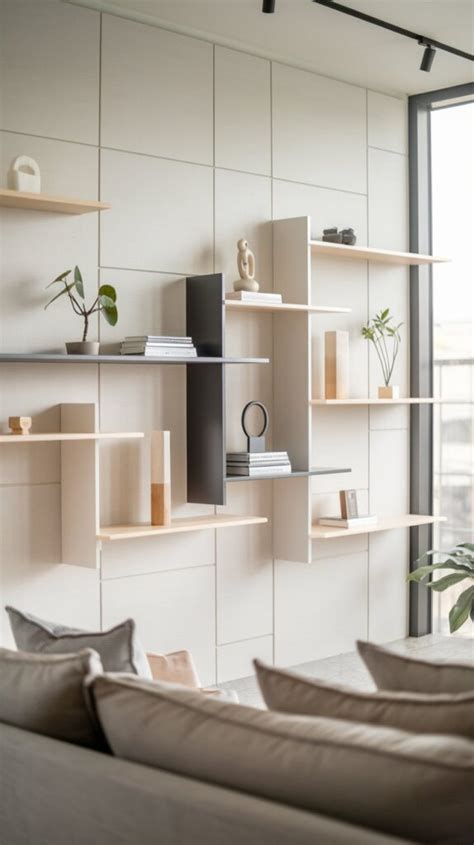
Floating shelves are a foundational element in modern living room design, offering a streamlined profile that keeps floor space completely open. Because they lack visible brackets, these wall-mounted boards create an illusion of lightness, making them ideal for compact rooms where bulky furniture would otherwise overwhelm the layout.

When installing floating shelves, anchoring them directly into wall studs is essential for safety, especially if you plan to support heavier items like ceramic vases or hardcover books. For a clean, decluttered look, limit the number of objects per shelf and incorporate plenty of negative space. Pair warm oak boards with matte black hardware for a contemporary contrast, or choose white painted finishes that blend seamlessly into light walls.
2. Versatile Ladder Shelves for Casual Elegance
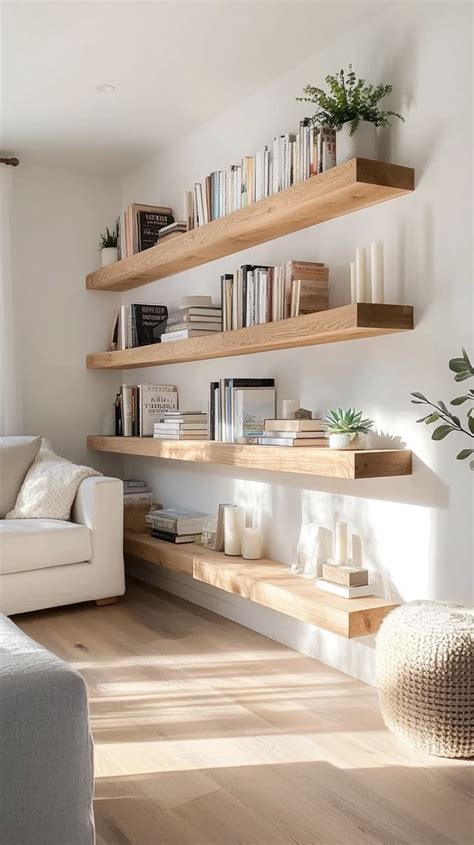
Leaning ladder shelves provide a relaxed, architectural silhouette that works wonders in transitional and bohemian living spaces. Tapering gently toward the top, these units combine deep lower ledges for larger storage baskets with shallow upper shelves for smaller decorative accents, creating a natural hierarchy for your items.
The primary advantage of a ladder shelf is its mobility and minimal wall-attachment requirements. Most designs lean securely against the wall with optional anti-tip brackets, allowing you to reposition them without leaving massive holes in your drywall. Use the lower shelves to store woven baskets that conceal loose electronics, cables, and children’s toys, leaving the upper tiers open for framed art and trailing houseplants.
3. Industrial Metal and Wood Bookcases for Heavy Collections
For book lovers and avid collectors, standard decorative ledges rarely suffice. Industrial-style bookcases featuring welded iron frames and thick reclaimed wood shelves offer robust structural integrity capable of supporting hundreds of pounds of literature and media.
These heavy-duty units bring a grounded, sophisticated character to living rooms, working particularly well in industrial, rustic, or urban loft settings. When styling a massive bookcase, avoid packing every single cubby to the brim. Instead, alternate vertical book stacks with horizontal placements, and leave occasional compartments completely empty to prevent the furniture from looking heavy and oppressive in the room.
4. Corner Shelving Units to Transform Wasted Angles
Unused corners often represent dead space in a living room floor plan. Tall corner shelving units or floating corner ledges turn these awkward architectural junctions into functional display zones without encroaching on primary walking paths or seating arrangements.
Curved wooden corner units soften boxy room dimensions, while geometric metal frames add modern architectural interest. Use corner shelves to house trailing greenery that benefits from ambient light, or arrange a vertical column of treasured mementos that draw the eye upward, accentuating high living room ceilings.
5. Modular Cube Storage Systems for Customizable Organization
Modular cube organizers are the ultimate workhorses for households needing adaptable storage. Available in various grid configurations, these units can accommodate fabric bins, woven storage boxes, and open display items interchangeably.
The modular nature allows you to customize how much clutter remains hidden versus exposed. You can insert opaque canvas drawers into the lower cubbies to stow away clutter out of sight, while keeping the top shelves reserved for art books and sculptures. This flexibility makes cube systems exceptionally resilient as your family’s storage needs evolve over time.
6. Built-In Wall Units for Seamless Architectural Integration
Built-in shelving creates a custom, high-end look that maximizes every square inch of available wall space. By framing a fireplace, television, or blank architectural wall, built-ins anchor the room with permanent cabinetry and display ledges tailored to your precise collection.
While built-in units require a higher upfront investment and professional carpentry, they deliver unmatched stability and structural integration. You can mix closed lower cabinets to hide board games and extra throws with open upper shelving for curated art displays, achieving a polished, clutter-free environment.
7. Glass-Front Display Cabinets for Dust-Free Curations
Glass-door cabinets offer the visual exposure of open shelving while protecting delicate collectibles, fine ceramics, and antique books from household dust and curious pets. They introduce a touch of classic sophistication to traditional or transitional living rooms.
The transparent panels keep the room feeling bright by allowing light to bounce through the glass panes. To prevent the interior from looking cluttered, group items by color or material family inside the cabinet, and avoid overcrowding the shelves so each displayed piece has room to breathe.
8. Low Credenza Shelves with Sliding Doors for Media Storage
Media consoles and low credenza shelves provide long, horizontal surfaces that can ground a living room while concealing electronics behind slatted or solid sliding doors. This low-profile approach keeps sightlines open across the room.
By keeping storage close to the floor, these units leave the upper wall space free for large-scale artwork or mirrors. Use the interior compartments to manage messy cable boxes and gaming consoles, while styling the top surface with a minimalist tray and a single accent lamp.
9. Geometric Wall Shelves as Functional Statement Art
Geometric shelving units—such as hexagonal honeycomb cells, interlocking rectangles, or asymmetrical grids—serve a dual purpose as both functional storage and striking wall art. They are fantastic for injecting personality into modern or eclectic spaces.
Because individual compartments are typically small, these shelves are best reserved for lightweight trinkets, crystals, small succulents, or collectible figurines. They help break up the monotony of blank drywall without requiring heavy furniture footprints below.
10. Rolling Bar Carts and Utility Shelves for Flexible Entertaining
Rolling utility carts with multiple tiers offer ultimate flexibility for active living rooms that frequently transition into hosting spaces. Equipped with caster wheels, these mobile shelves can be wheeled out of the way or positioned next to seating as temporary side tables.
Style the top tier with glassware or decorative trays for effortless entertaining, and use the lower shelves to store extra blankets, books, or magazines. Their mobility makes them a practical, dynamic addition to multi-functional living spaces.
Frequently Asked Questions
What type of living room shelf is best for small spaces?
For small living rooms, wall-mounted floating shelves and vertical ladder shelves are ideal because they utilize vertical wall space without taking up valuable floor area. This keeps the room feeling open, airy, and uncluttered.
How can I style living room shelves to look uncluttered?
To keep shelves looking intentional rather than messy, apply the rule of thirds and leave generous amounts of negative space. Group items in odd numbers, alternate between vertical and horizontal book stacks, and use decorative baskets to hide loose items like remotes and chargers.
What weight capacity do I need for heavy books versus decor items?
Lightweight decor items and small plants typically require shelves with a weight capacity of 10 to 15 pounds. For extensive book collections or heavy ceramic sculptures, look for sturdy wood or metal bookcases rated to hold 50 pounds or more per shelf, and always anchor wall units to studs.
How do I choose between wall-mounted and freestanding shelves?
Choose wall-mounted shelves if you want to maximize floor space and maintain a minimalist aesthetic in a compact room. Opt for freestanding bookshelves or modular units if you rent your home and want to avoid wall damage, or if you need heavy-duty storage capacity that can be easily rearranged.


