Revamping a tired living space often feels like an overwhelming puzzle, especially when balancing architectural quirks, limited square footage, and budget constraints. Across American homes—from mid-century suburban ranches to compact urban apartments and historic Victorians—successful living room makeovers rely less on total structural overhauls and more on strategic shifts in layout, lighting, and color. Examining real transformation journeys helps demystify the design process, offering concrete blueprints for turning awkward or outdated rooms into functional, inviting sanctuaries.
When planning a living room refresh, distinguishing between cosmetic updates and layout reconfigurations is essential for managing time and financial investment. Many impressive before-and-after projects achieve dramatic results simply by changing surface treatments, upgrading light fixtures, and rearranging furniture to optimize natural traffic flow. By focusing on practical decision criteria rather than fleeting trends, homeowners can achieve lasting aesthetic and functional improvements that suit their daily routines.
Reimagining Small Footprints and Awkward Layouts

Compact living rooms and awkwardly proportioned spaces frequently present major design hurdles in American housing. A typical narrow apartment living room or a closed-off suburban starter home often suffers from cramped seating arrangements and blocked natural light sources. Transforming these rooms usually requires embracing multi-functional furniture, floating layouts away from walls, and selecting vertical storage solutions that draw the eye upward.

In one notable transformation of a cramped 1950s ranch living room, the original heavy draperies and oversized sectional sofa made the space feel claustrophobic. Replacing the bulky seating with a streamlined, apartment-sized sofa and pairing it with glass-topped nesting tables immediately restored visual breathing room. Furthermore, painting the walls in a soft warm white instead of the previous dark beige amplified the natural daylight streaming through the front picture window. This combination of scale correction and light optimization proved that smaller footprints can deliver exceptional comfort without feeling cluttered.
When addressing a challenging layout, a common mistake is pushing all furniture directly against the perimeter walls in an attempt to maximize floor space. As demonstrated in numerous successful room makeovers, floating the primary seating arrangement in the center of the room—anchored by an appropriately sized area rug—creates a cozier, more intentional conversational zone. Incorporating vertical bookshelves or wall-mounted media units also clears floor clutter, making the entire room feel significantly wider and more balanced.
Budget-Friendly Cosmetic Upgrades That Yield Dramatic Results
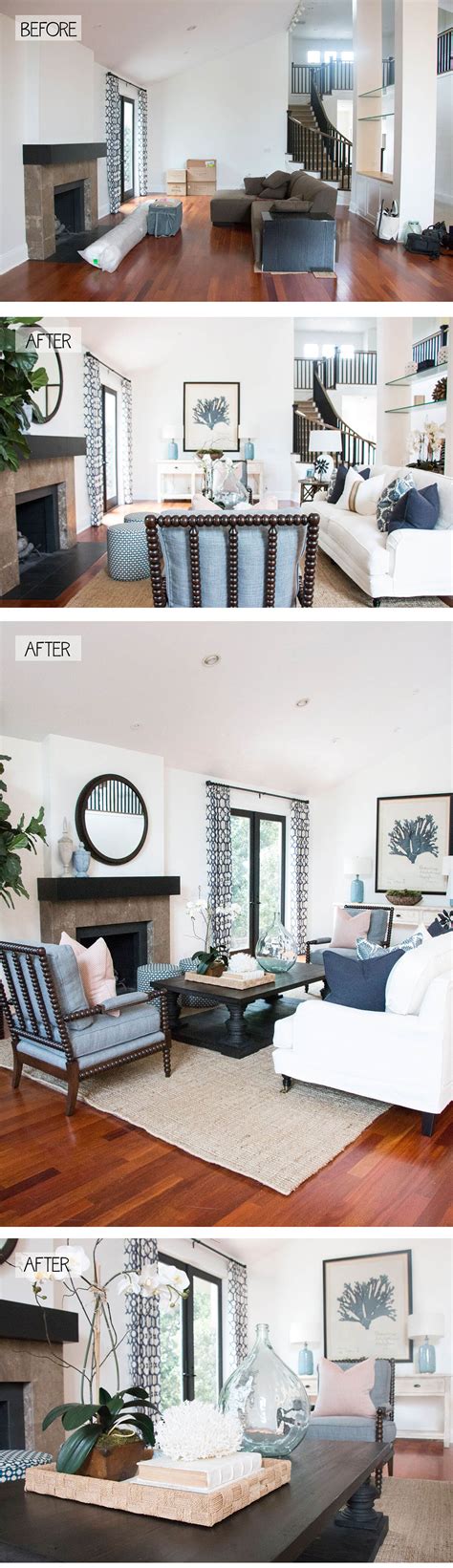
Major architectural renovations are not always necessary to achieve a stunning before-and-after transformation. Cosmetic updates focused on paint, architectural hardware, and layered lighting can completely alter the atmosphere of a room for a fraction of the cost. These approachable DIY-friendly projects allow homeowners and renters alike to personalize their spaces without waiting for a contractor or securing large building loans.

A frequent success story involves dated brick fireplaces and dark wooden trim dominating a traditional suburban living room. Applying a crisp white lime-wash or high-durability paint to the brick instantly modernized the focal point, while painting surrounding trim a matching tone unified the architectural elements. Updating builder-grade brass light fixtures with matte black or brushed nickel sconces and chandeliers added an immediate layer of custom sophistication. These cosmetic shifts show how cohesive color stories bridge the gap between old and new elements in a home.
Textiles and window treatments represent another high-impact, low-cost lever for living room makeovers. Swapping heavy, dated vertical blinds for ceiling-mounted linen drapery panels draws the eye upward and floods the interior with diffused natural light. Layering inexpensive textured throw pillows, a woven jute rug, and slipcovered accent chairs introduces tactile warmth. These budget-conscious choices prove that thoughtful curation matters far more than high-end luxury spending when creating an inviting family room.
Defining Open-Concept Spaces and Multi-Functional Zones
Open-concept floor plans remain wildly popular across the United States, yet they introduce distinct spatial challenges. Without interior walls to separate functions, open-plan living areas can easily look disorganized, cavernous, or visually chaotic. Successful living room makeovers in open-concept environments rely on clever zoning techniques, such as contrasting floor finishes, area rugs, and strategic furniture placement to anchor distinct living, dining, and working areas.
In a large open-plan great room where the living space previously bled awkwardly into the kitchen, designers utilized the back of a deep, neutral-toned sectional sofa to create an invisible boundary line. Adding a slim console table behind the sofa provided a drop zone for mail and keys while reinforcing the division between rooms. Overhead, updating the lighting fixtures from a single central flush-mount to multiple layered sources—including floor lamps and directional task lighting—helped establish an intimate mood within the larger open architectural shell.
Another effective strategy for open layouts involves repeating accent colors and textures throughout the shared space to maintain visual harmony. By pulling the earthy terracotta and warm brass tones from the kitchen backsplash into the living room’s throw blankets and art frames, the entire main level begins to feel unified rather than disjointed. Homeowners tackling open-concept refreshes should prioritize cohesive palettes to ensure every functional zone supports the overarching design narrative.
Frequently Asked Questions
How can I make a dark living room look brighter without major construction?
To brighten a dark living room without structural changes, focus on maximizing natural light and artificial illumination. Swap heavy, dark window coverings for sheer or lightweight linen panels mounted near the ceiling line to let in more daylight. Incorporate multiple light sources at different heights—such as floor lamps, table lamps, and wall sconces—instead of relying on a single overhead fixture. Additionally, paint walls in light, reflective neutral tones and add strategically placed mirrors opposite windows to bounce natural light deeper into the space.
What is the best furniture layout for a long, narrow living room?
For a long and narrow living room, avoid arranging all furniture along the perimeter walls, as this accentuates the tunnel-like feel. Instead, break the space into distinct functional zones, such as a primary conversation area anchored by a large rug and a secondary reading nook near a window. Use floating furniture arrangements, low-profile sofas, and armchairs that allow light to pass underneath to maintain an open, balanced flow of movement throughout the room.
Are before-and-after living room makeovers possible on a tight budget?
Yes, many high-impact living room makeovers rely entirely on budget-friendly cosmetic updates rather than costly renovations. Painting walls, updating tired fireplace brick with lime-wash, swapping out builder-grade light fixtures, and adding new hardware or throw pillows can completely transform a room’s aesthetic for a modest investment. Prioritizing DIY projects like board-and-wall treatments or adding inexpensive area rugs yields dramatic visual improvements without straining your wallet.


