Finding a centerpiece seating arrangement for your living room often feels like balancing conflicting priorities. Everyone wants a stylish sofa or sectional that looks like it belongs in a design magazine, yet everyday realities demand durability, comfort, and sensible pricing. When sales and clearance events cross your radar, distinguishing a genuine bargain from a low-quality product can be challenging. A discounted price tag is only a true value if the piece maintains its structural integrity and comfort over years of daily use.
Successfully updating your living room requires looking beyond superficial aesthetics and sales marketing. By understanding the core indicators of furniture craftsmanship, analyzing your room’s physical layout, and selecting practical upholstery, you can secure a great deal that withstands family life. This guide explores the critical criteria that help homeowners and renters identify reliable seating options, ensuring your investment enhances your home for the long haul.
How to Evaluate Sofa Frame and Cushion Quality

The longevity of any sofa or sectional rests entirely on what lies beneath the upholstery. When hunting for deals, budget manufacturers often compromise on internal materials to lower the retail price. Inspecting or inquiring about the frame construction is the single most effective way to avoid purchasing a piece that sags or breaks within a couple of years. Look for frames constructed from solid hardwood or kiln-dried engineered wood, which resist warping and provide a rigid foundation for the springs and cushions.
Cushion construction dictates daily comfort and determines how quickly the seating area will develop permanent impressions. High-resiliency foam wrapped in fiber or down offers superior support compared to cheap, low-density foam that flattens rapidly. Additionally, check the suspension system underneath the cushions. Eight-way hand-tied springs or high-grade sinuous steel coils provide even weight distribution and prevent the sagging commonly found in budget webbing suspensions.
Choosing Between a Sofa and a Sectional for Your Space
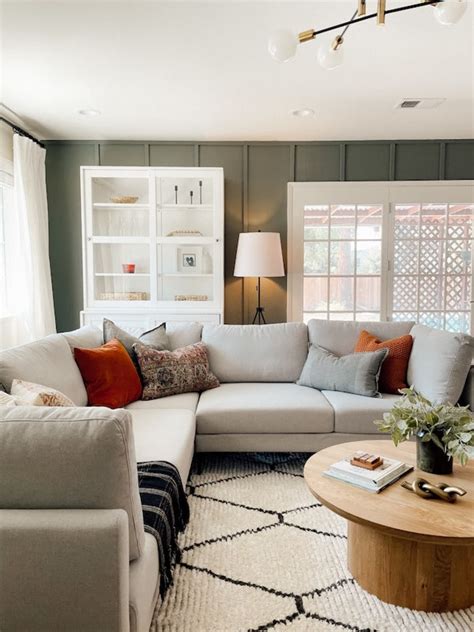
Deciding between a standard sofa and a sprawling sectional depends heavily on room dimensions and traffic flow rather than personal preference alone. While sectionals maximize seating capacity and create a cozy, enclosed gathering space, they can easily overwhelm modest or awkwardly shaped living rooms. Before committing to a large sectional configuration, measure your available floor space meticulously and map out clearance zones to ensure doors, windows, and walkways remain unobstructed.
For smaller apartments or multi-purpose living areas, a standard three-seater sofa paired with a movable armchair or ottoman often provides greater layout flexibility. If you love the sprawling lounge potential of a sectional but fear spatial crowding, look for modular options or apartment-scaled sectionals featuring reversible chaises. These versatile configurations adapt to changing room layouts if you relocate or rearrange your furniture in the future.
Selecting Upholstery Fabrics Built for Everyday Life
Upholstery choice is critical for anyone sharing a home with children, pets, or frequent guests. A striking color or luxurious texture loses its appeal quickly if the fabric stains permanently or traps pet hair beyond the reach of a vacuum. Performance fabrics, such as tightly woven synthetic blends, solution-dyed acrylics, and heavy-duty microfibers, offer exceptional resistance to spills, fading, and daily wear without sacrificing a soft hand-feel.
Leather and faux leather represent another durable category that cleans effortlessly with a damp cloth, though they require periodic conditioning to prevent cracking. Natural fibers like untreated linen or loose cotton weaves, while aesthetically charming, demand high maintenance and dry cleaning, making them less practical for high-traffic family rooms. Evaluating your household’s daily traffic patterns before selecting a fabric ensures your discounted seating remains easy to maintain for years to come.
Frequently Asked Questions
How do I know if a cheap sofa is actually good quality?
To determine if an affordably priced sofa is well-made, examine the frame construction and suspension. Reliable budget-friendly options use solid wood or kiln-dried engineered wood frames rather than unreinforced particleboard. Check that the suspension relies on sinuous steel springs or webbed platforms with sturdy reinforcement, and inquire about cushion density to ensure it uses high-resiliency foam rather than cheap packing foam.
What size sectional fits a small living room?
In smaller living rooms, look for apartment-sized sectionals or models with a reversible chaise rather than large, multi-piece configurations. Measure your room carefully, keeping at least 30 to 36 inches of clearance for primary walkways. A compact L-shaped sectional measuring under 85 inches on its longest side can anchor a small space effectively without dominating the entire floor plan.
Which upholstery fabrics are easiest to clean?
Performance fabrics labeled as stain-resistant or solution-dyed (such as Crypton or heavy-duty polyester blends) are generally the easiest to clean because liquids bead on the surface rather than soaking into the fibers immediately. Genuine leather and high-grade synthetic microfibers also rank among the most low-maintenance choices for households with active pets and children.


