Designing a modern living room for an American home requires a delicate balance between sleek architectural lines and everyday livability. Whether you reside in a sprawling suburban open-concept ranch or a compact urban apartment, achieving a contemporary look involves intentional choices regarding layout, lighting, and material selection. Rather than relying on sterile minimalism, today’s modern aesthetic embraces warmth, texture, and personalization to create spaces that feel both refined and deeply welcoming.
Across our curated exploration of 75 distinct modern living room directions, the common thread is adaptability. Modern design is not a rigid template but a flexible framework that accommodates active households, remote work needs, and multi-generational living. By understanding how to group furniture, select durable finishes, and layer lighting, homeowners and renters alike can transform their primary gathering space into a sophisticated yet comfortable sanctuary.
Defining the Modern American Living Room Layout
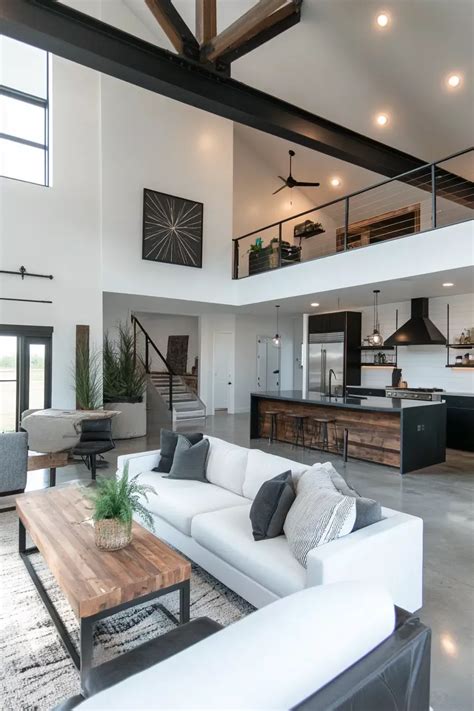
Open-concept floor plans remain a staple of American residential architecture, presenting unique spatial planning challenges. When a living room flows directly into the kitchen and dining area, defining boundaries without physical walls becomes essential. Modern layout strategies rely on floating furniture arrangements, oversized area rugs, and subtle ceiling treatments to delineate zones while maintaining an open, airy atmosphere.
Circulation paths are a critical consideration when positioning seating groups in these expansive spaces. Standard layouts often anchor the room around a primary focal point, such as a linear fireplace or a media console, while incorporating secondary conversational pockets. Maintaining at least three feet of clear walking space ensures the room functions smoothly during daily family routines or when hosting gatherings.
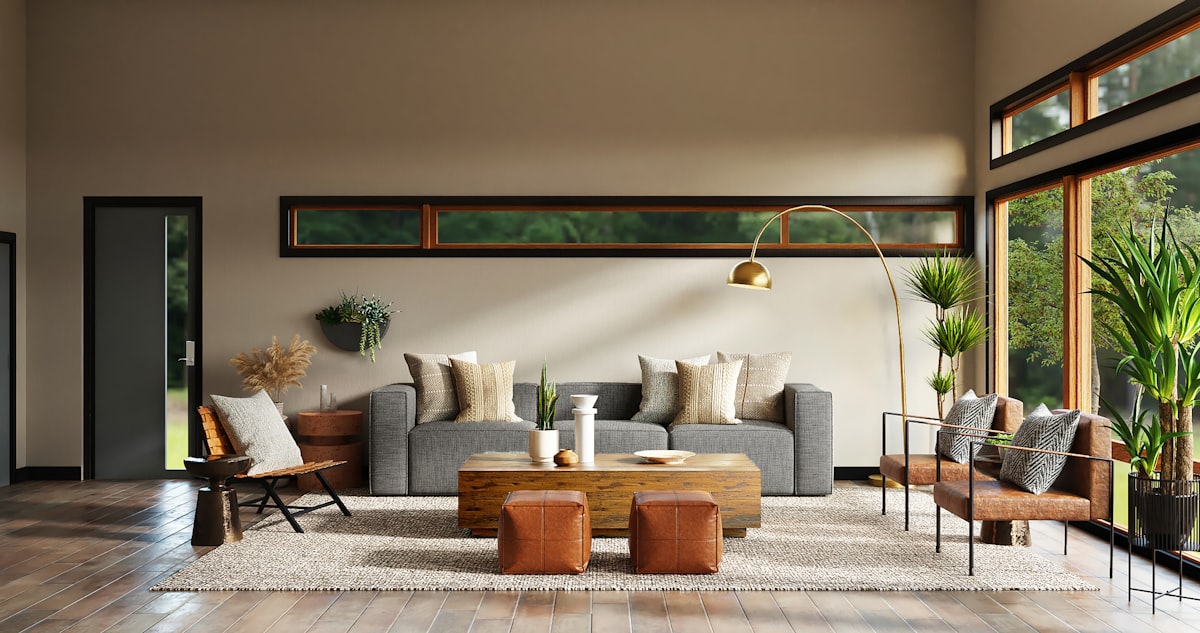
Beyond traditional sectional configurations, modern layouts increasingly favor modular seating that can be reconfigured based on the occasion. Pairing a streamlined low-profile sofa with sculptural armchairs prevents visual clutter and keeps sightlines open across the entire main floor. Incorporating multi-functional furniture, such as nesting coffee tables or storage ottomans, further maximizes utility without sacrificing clean aesthetic lines.
Warm Modern and Organic Contemporary Styles
To prevent contemporary spaces from feeling cold or unwelcoming, the warm modern design movement introduces organic elements, earthy color palettes, and tactile materials. This approach swaps stark white walls for nuanced shades of cream, warm taupe, clay, and soft olive. Natural wood tones—ranging from bleached white oak to rich walnut—bring foundational warmth that grounds the entire room.
Textural layering serves as the primary tool for adding depth in an organic modern living room. Combining smooth plaster walls with boucle upholstery, rough-hewn stone accent tables, and woven jute rugs creates a rich sensory experience. This tactile diversity ensures the space remains visually engaging even when working within a restrained, monochromatic color scheme.
Mid-Century and Urban Industrial Variations
Mid-century modern principles continue to influence American interiors through iconic furniture silhouettes, tapered wooden legs, and organic geometric forms. Integrating these classic pieces into a modern framework allows homeowners to honor architectural heritage while enjoying contemporary comfort. Low-slung credenzas and channel-tufted sofas fit seamlessly into both vintage suburban homes and newly built urban dwellings.
For those leaning toward an edgier aesthetic, urban industrial modernism highlights raw structural elements like exposed brick, blackened steel, and concrete flooring. Balancing these heavy architectural materials requires softer counter-balances, such as plush velvet drapery, oversized linen floor cushions, and warm ambient lighting fixtures that diffuse the room’s intensity.
Practical Solutions for Small Modern Spaces
Maximizing a compact living room requires disciplined editing and smart spatial tricks that enhance perceived square footage. Choosing furniture with exposed legs allows light to pass underneath pieces, making the floor area appear larger than it actually is. Wall-mounted shelving and floating media consoles free up valuable floor space while maintaining a clean, uninterrupted horizon.
Reflective surfaces, including strategically placed oversized mirrors and glass-topped coffee tables, bounce natural light around the room to brighten dim corners. When selecting color palettes for smaller footprints, sticking to a cohesive monochromatic scheme prevents the eye from stopping abruptly, thereby creating an illusion of expansive continuity throughout the room.
Frequently Asked Questions
What defines a modern living room design in American homes?
Modern living room design is characterized by clean lines, functional layouts, uncluttered surfaces, and a harmonious blend of form and utility. In American homes, it frequently adapts to open-concept floor plans through intentional zoning, large windows connecting indoor and outdoor spaces, and a mix of sleek contemporary pieces with warm, livable textures.
How can I make a small living room look modern and spacious?
To make a compact living room feel modern and open, opt for furniture with exposed legs, wall-mounted storage units, and a restrained neutral color palette. Avoid overcrowding the room with oversized furniture; instead, select multi-functional pieces and use large mirrors to reflect natural light and create visual depth.
What color schemes work best for modern living rooms?
Popular modern color schemes rely on neutral foundations like soft whites, warm grays, taupe, and beige, layered with earthy accent tones such as terracotta, olive green, or charcoal. This palette provides a calm backdrop that can easily be updated with seasonal accessories or textural accents.
How do I mix textures to keep a modern living room from feeling cold?
You can prevent a modern room from feeling cold by pairing smooth materials like glass and metal with tactile elements such as boucle upholstery, knit throws, natural wood grains, and woven natural-fiber rugs. The key is combining varied surface finishes to create visual and physical warmth.


