The entryway serves as the vital transition point of any American home, establishing the design tone the moment the front door opens while managing daily clutter. Whether your floor plan features a dedicated foyer or a tight urban apartment hallway, establishing a functional drop zone is essential. Incorporating console tables from the Ashley® catalog offers a reliable way to merge sturdy construction with diverse design movements, ranging from rustic modern farmhouse to sleek industrial aesthetics.
Selecting the right furniture piece requires balancing physical spatial constraints with your household’s daily routines. A well-chosen console does more than simply fill an empty wall; it anchors the space, creates vertical visual balance, and conceals everyday items like keys, mail, and footwear. Exploring how specific dimensions, storage configurations, and styling layers interact will help you build an entryway that is as practical as it is visually inviting.
Sizing and Spatial Planning for U.S. Entryways
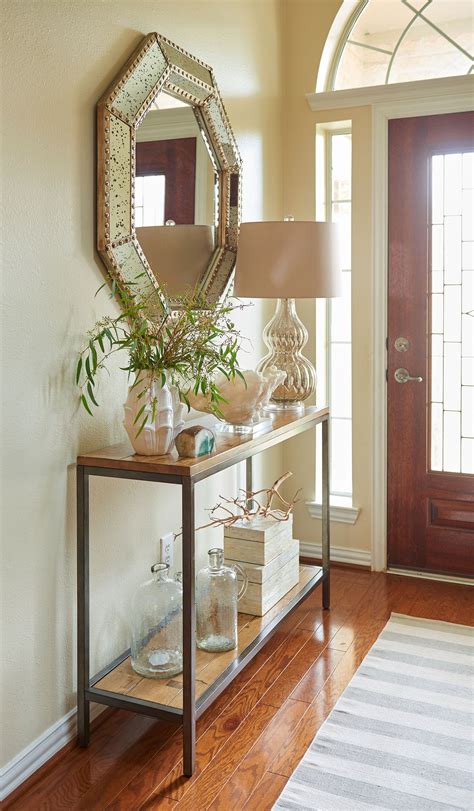
Before selecting a specific console model, taking accurate measurements of your entryway floor plan prevents common spatial layout mistakes. In typical suburban homes with generous foyers, you can accommodate deeper, substantial wood console tables that make a bold architectural statement. Conversely, narrow hallways and apartment entryways require slimline profiles—often under twelve inches deep—to maintain proper walking clearance and meet general home safety guidelines.
Maintaining adequate clearance around doors, coat closets, and stairways ensures your new furniture piece enhances traffic flow rather than obstructing it. Designers generally recommend leaving at least thirty-six inches of clear walking path around primary pathways. When browsing Ashley® options, pay close attention to leg placements and overall width specifications to ensure the console comfortably bridges the space without overwhelming adjacent walls or blocking entry points.
Functional Storage Solutions: Balancing Hidden and Open Space
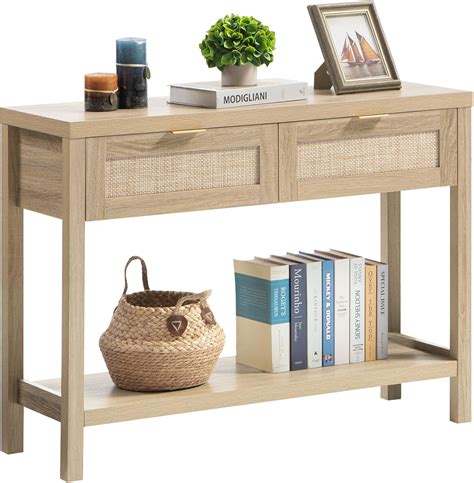
An effective entryway console must manage the constant influx of everyday clutter that enters a busy household. Models featuring integrated drawers offer a discreet hiding spot for loose items like sunglasses, charging cables, and mail, keeping the surface visually clean. Open lower shelves, on the other hand, provide an ideal spot for woven baskets, structured storage bins, or neatly arranged pairs of daily footwear.
Choosing between closed cabinetry and open shelving depends entirely on your household habits and tolerance for visual clutter. Homes with children or active pets often benefit from enclosed storage where miscellaneous items can be tucked away instantly. If you prefer an open, airy aesthetic, pairing a minimalist metal-frame console with matching textile baskets delivers functional organization without sacrificing visual breathing room.
Styling Formulas for the Perfect Console Surface

Once your console table is securely positioned, surface styling transforms a utilitarian furniture piece into a sophisticated design focal point. A reliable interior design formula relies on vertical layering, typically starting with a large anchor piece mounted to the wall, such as an arched mirror or a textured piece of artwork. This vertical element draws the eye upward, making compact entryways feel significantly more expansive and tall.
Layering smaller decorative elements across the top surface prevents the console from looking cluttered while adding tactile warmth and personality. Introduce a slender table lamp to provide welcoming ambient lighting during evening hours, alongside a small ceramic tray or wooden bowl for everyday essentials. Balance these items with a living element, such as a potted pothos or a simple vase of dried botanicals, to bring organic texture and life to the composition.
Matching Ashley® Consoles to Your Home’s Aesthetic
Integrating a new entryway table into an established interior design scheme requires careful consideration of existing wood tones, hardware finishes, and architectural details. Homes leaning toward modern farmhouse or transitional styles often benefit from distressed wood finishes and classic turned legs that exude warmth and timeless character. These warm-toned wood surfaces naturally complement neutral paint colors and traditional wainscoting.
For contemporary or urban loft environments, sleek metal bases paired with tempered glass or minimalist concrete-look tops create a clean, streamlined aesthetic. Matching the console’s hardware finish—whether matte black, brushed nickel, or aged brass—to your existing entry door handles and light fixtures unifies the space. This cohesive approach ensures the entryway feels like a deliberate, well-planned extension of your main living areas.
Frequently Asked Questions
What height should an entryway console table be?
Most standard entryway console tables range from thirty inches to thirty-six inches in height. This dimension aligns comfortably with standard door knobs, light switches, and human ergonomics, making surface items easy to reach as you enter or leave the home.
How do I style a narrow hallway console table safely?
In narrow spaces, choose a slim console with a shallow depth profile and secure it directly to the wall using anti-tip hardware brackets. Keep surface decor minimal with flat trays and low-profile items to prevent accidental knocks from passing foot traffic.
Can I use a dining room buffet or media console as an entryway table?
While some low-profile media consoles work well, traditional dining buffets are often too deep and wide for standard entryways. Always measure your floor clearance and ensure the piece does not obstruct your front door or hallway path.


