Designing a welcoming and functional gathering space often begins with the foundation of your furniture layout. While sofas and accent chairs anchor the room, living room table sets provide both visual balance and vital everyday utility. Choosing a coordinated package of a center coffee table paired with matching end tables or console units eliminates the guesswork of mixing disparate pieces. However, navigating the vast array of styles, finishes, and configurations available on the U.S. market requires a thoughtful approach to scale, lifestyle needs, and room dimensions.
When assessing your options, it helps to understand what a standard collection includes and how each component interacts with your existing seating. A typical three-piece package features one central coffee table and two matching side tables, though many modern variations substitute a console table or nesting units to better suit compact city apartments or expansive suburban open-concept layouts. Evaluating these configurations through the lens of your daily routine ensures that your investment enhances both the look and livability of your home.
Understanding Configurations: Matching Sets vs. Mixed Materials
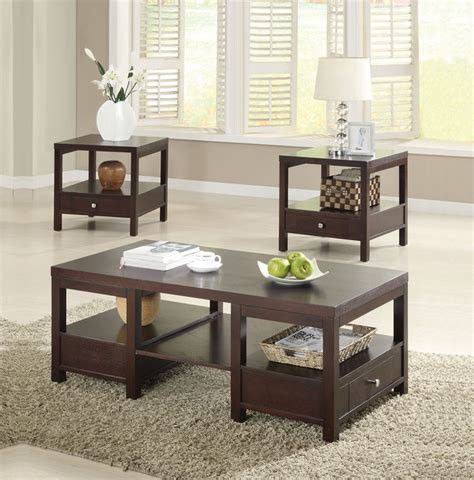
Opting for a uniform table set provides instant harmony, anchoring the living room with a consistent finish, wood grain, or metal tone. This approach is particularly effective in traditional, transitional, or formal spaces where symmetry creates a sense of calm and order. A matching set removes the friction of coordinating different hues, ensuring that your furniture looks intentionally curated rather than haphazardly assembled over time.
On the other hand, embracing mixed materials or curated collections allows for a more personalized, collected-over-time aesthetic that prevents a room from feeling flat or overly showroom-like. Pairing a warm oak coffee table with sleek black metal or marble-topped end tables introduces textural contrast and depth. When blending styles, maintaining a common thread—such as matching leg designs or consistent hardware finishes—prevents the arrangement from feeling chaotic and disjointed.
Evaluating Materials for Durability and Lifestyle
Material selection is perhaps the most critical decision when purchasing living room tables, especially for households with children, pets, or high foot traffic. Solid hardwoods like oak, walnut, and maple offer incredible longevity and can often be refinished if scratched, bringing timeless warmth to traditional and modern rustic interiors alike. They do, however, require coasters to prevent water rings and routine dusting to maintain their luster.
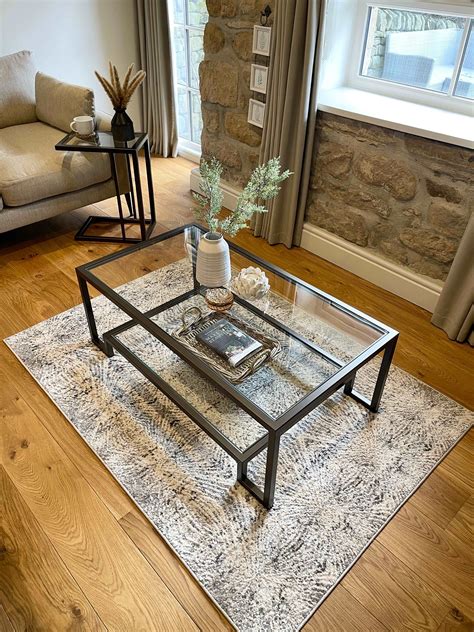
For contemporary spaces or smaller rooms, glass and metal combinations create an airy, open feeling by allowing light to pass through the surfaces. Tempered glass provides safety and durability, though it demands frequent cleaning to keep fingerprints at bay. Meanwhile, stone surfaces like marble or travertine offer striking architectural presence and heat resistance, but their porous nature requires sealing to prevent stains from everyday spills, making them better suited for quieter adult households.
Spatial Planning and Scale for U.S. Living Rooms
Before committing to any table configuration, careful spatial planning is essential to ensure comfortable traffic flow. In standard American living rooms, your coffee table should sit roughly 16 to 18 inches away from your sofa, leaving enough legroom to move comfortably without stretching too far to reach a beverage. End tables, meanwhile, should ideally match the height of the sofa arm they sit beside, or sit slightly lower for a more casual, accessible profile.
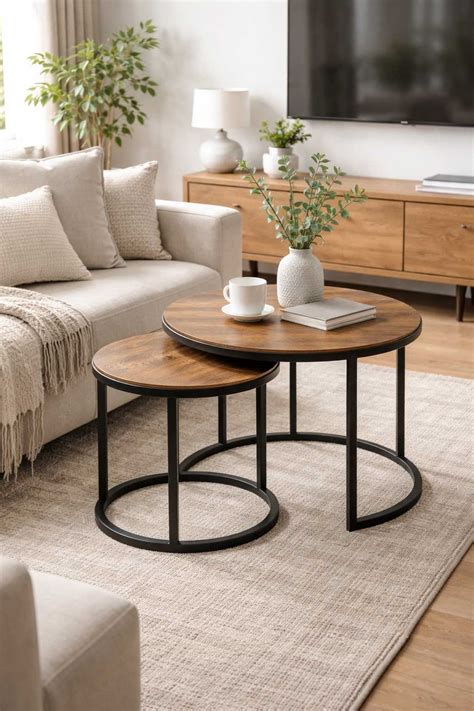
If you are furnishing a compact urban apartment, oversized heavy timber sets can quickly overwhelm the floor plan. In these environments, nesting tables or lift-top coffee tables offer ingenious multi-functional versatility. Nesting pieces can be tucked away when floor space is at a premium and pulled out during gatherings to serve drinks or hold books, maximizing every square foot without sacrificing style or utility.
Frequently Asked Questions
What pieces typically come in a standard living room table set?
A standard living room table set typically includes one coffee table designed to sit in front of your sofa and two matching end tables meant to flank the ends of the couch or accent chairs. Some modern collections also offer console tables designed to sit behind a floating sofa or against an empty wall.
How do I choose table sizes that fit my living room layout?
Measure your available floor space while leaving at least 30 to 36 inches of clearance around major pathways. Ensure your coffee table is about two-thirds the length of your sofa and leaves roughly 16 to 18 inches of legroom between the table edge and the seating.
Which materials are most durable for families with kids or pets?
Solid hardwoods and durable engineered woods with protective finishes stand up exceptionally well to everyday bumps and rough use. Powder-coated metal bases and textured wood grains are also forgiving, hiding minor scuffs much better than high-gloss lacquers or unsealed marble.
How can I mix and match table finishes without making the room look cluttered?
To successfully mix finishes, anchor the space with one dominant material and introduce a secondary material through a single accent piece. Ensure there is a unifying element, such as consistent leg shapes, matching hardware colors, or a cohesive overall design style like mid-century modern or industrial.


