The entryway serves as the first impression of your home, setting the tone for every room that follows. In many U.S. residences—ranging from compact urban apartments to spacious suburban foyers—this transition space must balance aesthetic appeal with everyday practicality. Incorporating a modern console table offers an effortless solution to anchor the room, create a designated drop zone for keys and mail, and showcase curated decor. Choosing the right piece involves weighing precise spatial constraints against clean design lines, ensuring your hallway remains both welcoming and orderly.
Understanding Modern Console Table Styles for Different U.S. Floor Plans
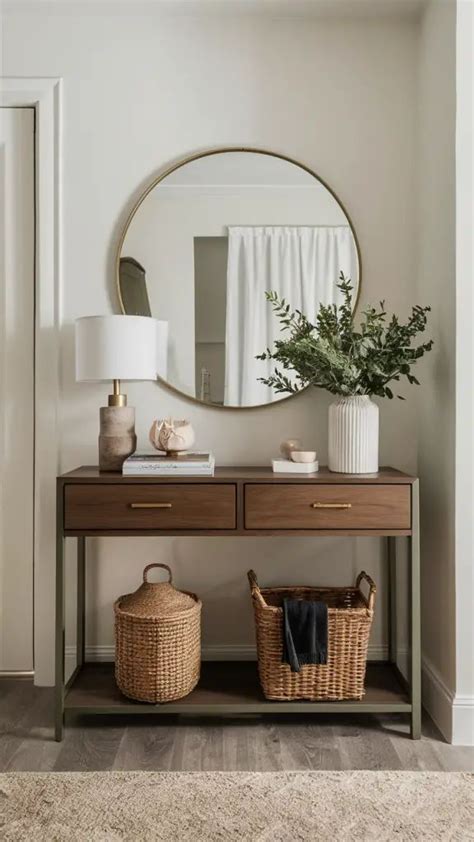
Modern design encompasses a wide spectrum of visual expressions, each bringing distinct character to an entryway. Minimalist tables often feature sleek powder-coated metal frames and ultra-thin wooden tops, making them ideal for small city apartments where visual lightness keeps the room from feeling cramped. Mid-century modern variations lean into warm walnut tones, tapered legs, and subtle geometric drawer pulls, adding organic warmth and retro charm to traditional suburban foyers.
For homes with industrial or transitional architecture, console tables combining raw steel with reclaimed wood provide a sturdy, tactile focal point. Meanwhile, glam-inspired designs incorporating brushed brass, tempered glass, or faux marble elevate open-concept entryways by reflecting natural light and introducing a touch of refined luxury. Selecting the right style depends entirely on how your entryway connects to the adjacent living spaces, ensuring a seamless visual transition throughout your home.
Crucial Sizing and Placement Rules for Hallways and Foyers
Before purchasing any modern console table, careful measuring is essential to prevent traffic bottlenecks in your hallway. Standard entryway consoles typically range from 30 to 36 inches in height, which places the surface at a comfortable level for dropping keys or checking your appearance in a wall-mounted mirror. Depth is another critical factor; narrow corridors require ultra-slim profiles measuring between 9 and 12 inches deep, while more generous foyers can easily accommodate tables up to 18 inches deep.
Maintaining adequate clearance around the furniture guarantees that doors can swing open freely and family members can pass through without bumping into corners. As a general rule of thumb, leave at least 36 inches of walking space around the console table if it sits in a dedicated hallway. If your entryway opens directly into a living room, use an area rug to visually anchor the console zone, separating the drop area from your primary seating arrangement.
Selecting Durable Materials for High-Traffic Entry Zones
Entryways endure heavy daily wear from backpacks, wet umbrellas, muddy shoes, and dropped keys. Consequently, material selection goes beyond pure aesthetics; durability and ease of maintenance are paramount. Solid hardwoods like oak and walnut offer exceptional longevity and can be refinished over time, though they require coasters for wet items. Engineered woods with high-pressure laminates provide a budget-friendly alternative that resists scratching and moisture remarkably well.
Metal and glass combinations create a sleek modern silhouette, but tempered glass tops require frequent dusting and fingerprint wiping to maintain their pristine sheen. Natural stone and faux marble surfaces bring sophisticated texture into the foyer, though porous stones need proper sealing to prevent stains from spilled coffee or wet boots. Weighing how your household uses the front door will guide you toward a material that withstands daily routines without demanding constant upkeep.
Practical Styling Formulas: Decorating the Surface and Space Below
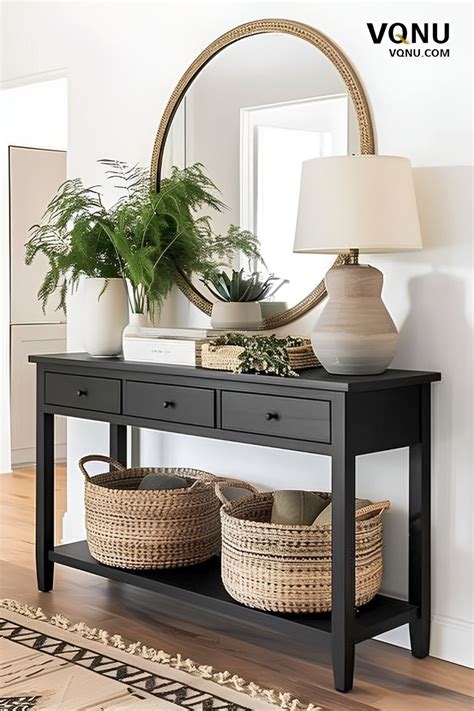
Styling a modern console table requires a careful balance between decorative flair and functional utility. Begin with an asymmetrical arrangement on top: anchor one side with a tall element like a sculptural table lamp or a framed mirror, balance the center with a low decorative tray for keys, and add a touch of nature with a small potted plant or a vase of dried stems. Avoid overcrowding the surface so that family members still have functional space to empty their pockets upon walking through the door.
The often-neglected space underneath the console table presents a valuable opportunity for extra storage and visual depth. In compact homes, tucking a pair of woven baskets beneath the table provides hidden storage for seasonal accessories like gloves, scarves, and umbrellas. Alternatively, sliding upholstered ottomans under the table creates a clever seating option for putting on shoes while adding rich texture to the entryway floor plan.
Frequently Asked Questions
What makes a console table ‘modern’?
A modern console table typically features clean architectural lines, minimal ornamentation, innovative material pairings such as metal and wood, and functional forms designed for contemporary living spaces.
How high and deep should an entryway console table be?
Most console tables stand between 30 and 36 inches high. Depth varies based on your hallway layout, ranging from 9 to 12 inches for narrow entryways and up to 18 inches for spacious foyers.
How do I style a narrow entryway without making it look cluttered?
Stick to a slim-profile console table, use a wall-mounted mirror to reflect light, limit surface decor to two or three essential items, and utilize under-table baskets for hidden storage.
What materials hold up best in high-traffic entry areas?
Durable manufactured woods, treated solid hardwoods, powder-coated metals, and sealed stone surfaces offer excellent resilience against everyday wear, moisture, and heavy foot traffic.


