Blank walls can make any American home or apartment feel unfinished, but commercial shelving options often carry high price tags or fail to match exact spatial requirements. Crafting your own hanging and floating wall shelves offers a satisfying way to customize your interior while keeping material expenses low. Whether you are working with standard 16-inch wood stud framing in a suburban house or navigating concrete-backed drywall in an urban rental, building custom storage allows you to maximize vertical space creatively.
This comprehensive guide explores fifty distinct, budget-conscious shelving concepts categorized by style, material availability, and installation complexity. From minimalist wooden ledges to upcycled crates and leather-strap suspensions, these projects combine aesthetic charm with practical load-bearing solutions tailored to standard residential construction.
Understanding U.S. Wall Construction and Weight Capacity
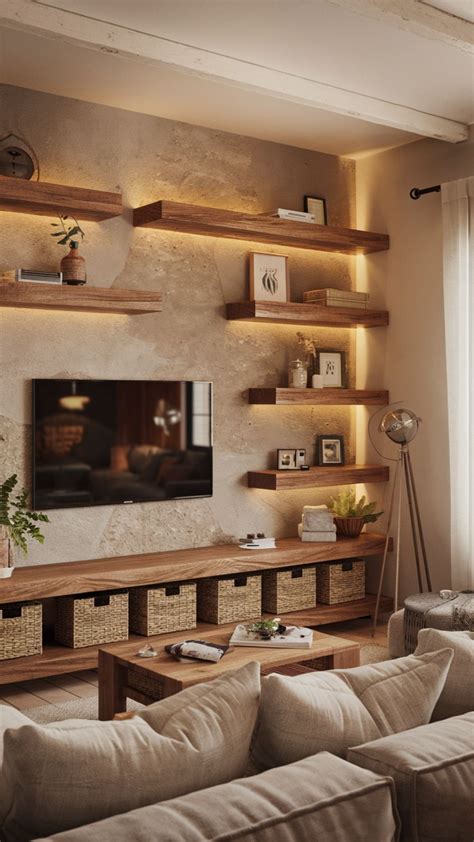
Before gathering your lumber and hardware, understanding the mechanics behind American residential wall assemblies is essential for safety and structural integrity. Most modern homes feature wooden or steel studs spaced 16 inches apart behind half-inch drywall, while older properties or high-rise apartments may incorporate plaster or masonry surfaces. Securing shelves directly into studs provides the highest weight capacity, often supporting up to 50 pounds or more depending on the bracket design.
When stud placement does not align with your preferred layout, quality hollow-wall anchors or toggle bolts serve as reliable alternatives for lighter loads like small planters or framed photographs. Always verify the maximum weight rating of your chosen anchors before loading decorative items onto the boards. Ignoring these thresholds frequently leads to sagging boards, damaged drywall, or hazardous wall failures over time.
Essential Tools and Cost Expectations
Building a custom wall shelf rarely requires a professional workshop. Basic supplies typically include a stud finder, a reliable spirit level, a power drill, wood screws, and sandpaper. Most projects detailed across our fifty design concepts cost between $10 and $30 in raw materials, especially when utilizing dimensional lumber from local home improvement centers like Home Depot or Lowe’s.
Investing in a stud finder equipped with live wire detection prevents accidental electrical punctures during installation. Allocating time for proper surface preparation, such as pre-drilling pilot holes and applying clear polyurethane sealants, ensures your handmade shelves maintain their finish through years of daily living.
Minimalist Floating Wooden Shelves (Designs 1 to 15)
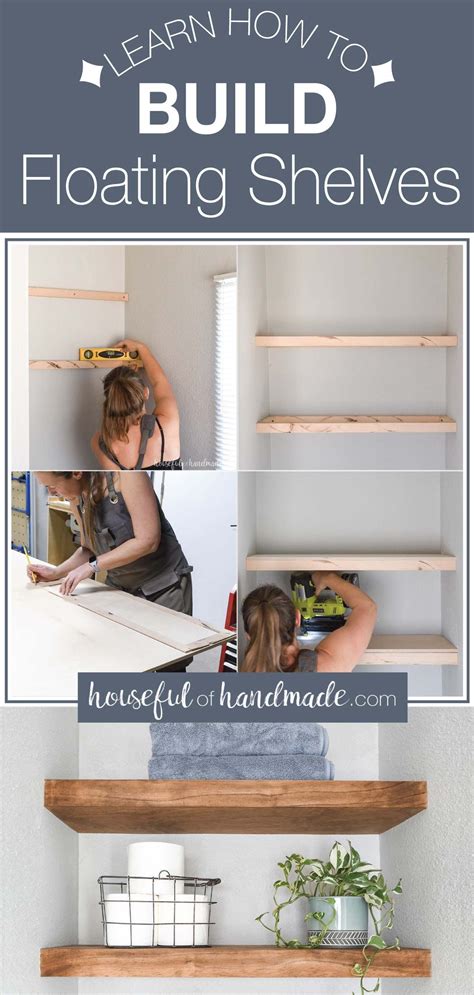
Minimalist floating shelves provide a clean, uncluttered aesthetic that makes rooms appear larger by eliminating visible support brackets. These designs rely on concealed internal supports or heavy-duty mounting rods anchored firmly into wall studs. Common budget-friendly wood choices include whitewood, common pine, or repurposed scaffold boards sanded down to a smooth, organic finish.
To build a standard box-style floating shelf, construct a hollow rectangular frame using thinner plywood strips that attach directly to the wall. Slide a slightly larger outer box made of finished lumber over the internal cleat, securing it underneath with small finishing nails. This hollow construction significantly reduces overall weight while maintaining rigid structural stability for books and ceramics.
Finishing Techniques for Raw Lumber
Raw dimensional lumber can easily be elevated to look like expensive hardwood through thoughtful staining and conditioning. Applying a pre-stain wood conditioner helps softwoods like pine absorb dark walnut or ebony stains evenly without blotchiness. Alternatively, a simple whitewash technique using diluted white acrylic paint creates a bright, Scandinavian-inspired look ideal for airy living rooms and nurseries.
Once your chosen stain dries completely, protect the porous surface with two coats of matte water-based polyurethane. A matte finish preserves the natural tactile quality of the wood while guarding against water rings from small houseplants or everyday dust accumulation.
Renter-Friendly Hanging Shelves (Designs 16 to 30)
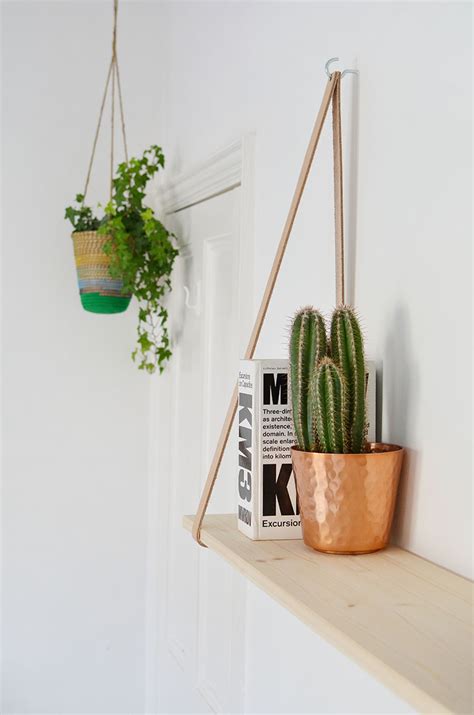
Renters often struggle with interior decorating due to strict lease clauses regarding wall damage and heavy hardware installation. Hanging shelves suspended from nylon rope, jute twine, or repurposed leather belts solve this dilemma by requiring minimal anchor points—often just a single heavy-duty picture hook or toggle anchor per bracket. These floating suspensions sway slightly, introducing dynamic vertical movement into bedroom and kitchen layouts.
Leather-strap shelves offer a particularly chic mid-century modern aesthetic. Cut two matching strips of thick veg-tanned leather, fold them into loops around the ends of a stained oak board, and screw the top ends securely into the wall. Because the leather bears the weight cleanly, you achieve high-end designer style for a fraction of retail cost with very little drywall patching required upon move-out.
Creative Suspension Materials
Exploring unconventional hanging materials allows you to personalize your wall storage further. Heavy-duty brass chains paired with dark walnut planks impart an industrial edge, whereas macrame cotton cordage introduces rich bohemian texture to neutral spaces. When securing hanging shelves, always ensure your knot-tying or hardware crimps are rated well above the anticipated weight of your displayed items.
Balancing items evenly across suspended boards prevents the shelf from tilting awkwardly to one side. Place heavier ceramic objects toward the center and lighter items near the outer edges to maintain a stable, level presentation.
Upcycled and Repurposed Wall Shelves (Designs 31 to 40)
Upcycling everyday objects into wall storage champions sustainability while injecting distinct personality into your home decor. Wooden wine crates, vintage desk drawers, unused skateboards, and even hardcover books can be structurally reinforced and mounted directly onto wall studs. These conversation pieces add instant architectural character to home offices, entryways, and children’s bedrooms.
Wooden produce crates, for instance, can be sanded, painted on the interior back panel for a pop of color, and screwed directly to wall studs through their rear slats. Grouping three or four crates in an asymmetrical cluster creates a modular bookcase effect that provides both open display ledges and enclosed cubby storage.
Industrial Pipe and Heavy Bracket Shelves (Designs 41 to 50)
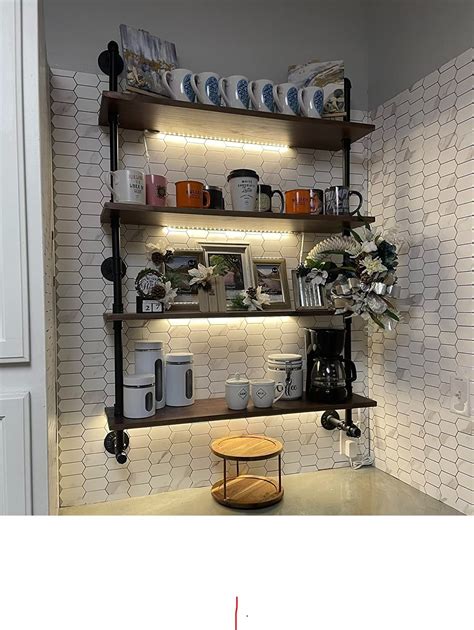
For high-traffic areas requiring robust durability, industrial pipe and heavy metal bracket shelves deliver unmatched strength. Utilizing black iron plumbing pipes and threaded floor flanges, you can assemble rugged support brackets that pair beautifully with thick slabs of cedar or butcher block countertops. These sturdy units excel in kitchens for organizing heavy dinnerware or in mudrooms for holding wet winter gear.
Assembling iron pipe brackets requires thorough degreasing with rubbing alcohol before priming and painting with a matte black or brass metallic spray. When screwing the wall flanges into your studs, use heavy structural wood screws rather than standard drywall screws to guarantee the assembly can safely handle heavy loads without pulling loose.
Expert Styling Formulas for DIY Wall Shelves
Once your custom shelves are safely anchored, styling them effectively prevents visual clutter. A reliable interior design formula involves the “rule of thirds” and asymmetrical triangle arrangements. Place a tall item, such as a framed print or a trailing pothos plant, on one end of the shelf to anchor the visual weight, then balance it with a medium-sized decorative object and a small stack of horizontal books on the opposite side.
Leave breathing room around your decor rather than packing every square inch of wooden surface. Negative space highlights the craftsmanship of your handmade shelves and allows each curated object to stand out cleanly, completing your balanced, professionally styled American interior.
Frequently Asked Questions
How can I make floating shelves that hold heavy items without visible brackets?
To support heavier loads without visible hardware, use a sturdy internal wooden cleat system screwed directly into multiple wall studs. Slide a hollow box shelf over the cleat and secure it from underneath. For maximum strength, heavy steel rod inserts anchored into the framing studs offer robust weight capacity for books and heavy decor.
What are the best renter-friendly hanging shelf options that minimize wall damage?
Renter-friendly shelving relies on systems that reduce anchor holes, such as leather strap or rope-hung shelves that require only one or two hanging points. You can also utilize heavy-duty adhesive wall mounting strips for ultra-lightweight display ledges, though you should always check weight limitations before placing fragile items on them.
How much does it typically cost to build DIY wall shelves?
Most DIY wall shelf projects cost between $10 and $40 in materials, depending on the type of wood and hardware chosen. Utilizing dimensional pine, scrap wood, or upcycled items keeps costs toward the lower end, while specialty hardwoods and industrial iron pipes push expenses closer to the higher end.
What tools are required to anchor shelves safely into U.S. drywall and studs?
Essential tools include a reliable stud finder with live wire detection, a spirit level to ensure straight placement, a power drill, wood screws, and appropriate wall anchors or toggle bolts for hollow drywall sections. Pre-drilling pilot holes prevents wood splitting and ensures secure fastener engagement.


