Finding adequate storage in a typical American home or apartment often feels like an ongoing puzzle. Standard construction dimensions, such as traditional 16-inch wall stud spacing, dictate how much weight our walls can safely support, while rental agreements frequently restrict permanent alterations. Embracing do-it-yourself shelving allows you to bypass expensive custom cabinetry while reclaiming vertical square footage that often goes completely unused. Whether you need a clever way to display books in a compact living room or heavy-duty organization for a garage, building your own shelves offers unmatched customization at a fraction of retail costs.
Successful shelving projects depend heavily on matching your hardware and lumber selections to the specific demands of your space. Standard American home improvement centers offer an abundance of affordable softwood boards, decorative brackets, and anchoring hardware that can be customized with basic tools. Before picking up a saw or a drill, evaluating your wall type, weight requirements, and aesthetic preferences will ensure your handmade storage solution remains both safe and visually striking for years to come.
Renter-Friendly and No-Drill Shelving Ideas
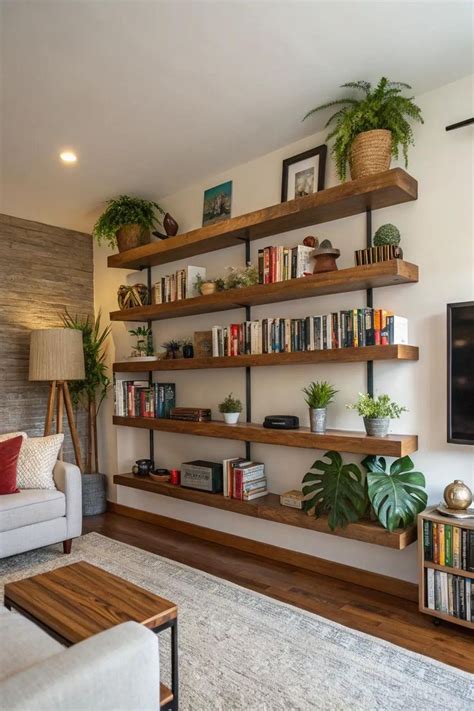
Renting an apartment across the United States often limits your ability to drive large screws into drywall, but maximizing vertical space is still entirely achievable. Temporary and tension-based shelving systems provide a wonderful compromise, allowing you to create functional displays without risking your security deposit upon move-out. These configurations rely on heavy-duty adhesive strips, clever tension poles, or existing architectural ledges to hold everyday items securely. Selecting the right temporary approach requires balancing how much weight you plan to place on the boards against the restrictions outlined in your specific lease agreement.

When permanent fasteners are entirely off the table, creativity becomes your most valuable asset. Many apartment dwellers successfully utilize heavy-duty command fasteners or freestanding furniture pieces that anchor gently to the wall via anti-tip straps rather than heavy load-bearing brackets. This gives you the freedom to design custom storage zones in rental living rooms, kitchens, and bedrooms without sacrificing your peace of mind regarding future lease inspections.
Leather Strap Hanging Shelves
By utilizing sturdy leather strips paired with heavy-duty masonry or specialized drywall anchors that require minimal patching, you can suspend a lightweight pine board cleanly against the wall. This project takes under an hour and introduces a warm, organic texture to blank drywall without heavy metal brackets. When styling leather-strapped boards, keep the overall load light—favoring framed photos, trailing pothos plants, or lightweight ceramic decor over heavy stackable textbooks to ensure the hanging anchors remain entirely secure.
Tension Pole Bookcases
Floor-to-ceiling tension poles wedge securely between your flooring and ceiling joists, requiring zero screws or wall anchors. You can attach lightweight wooden shelves directly to the vertical tracks, creating a customizable bookcase that adapts seamlessly to standard eight-foot American apartment ceilings. This method lets you adjust shelf heights on the fly whenever your book collection or display pieces grow, making it one of the most flexible storage investments for renters.
Budget-Friendly Living Room and Bedroom Displays
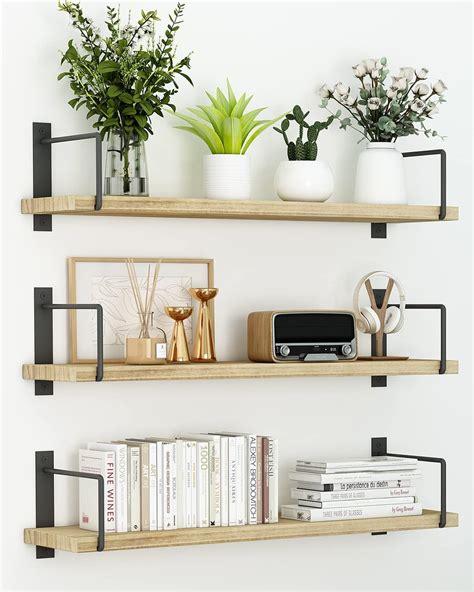
Living rooms and bedrooms often accumulate clutter on floor surfaces because eye-level and upper wall zones remain empty. Crafting open wooden displays draws the eye upward, making compact rooms feel considerably taller and more open. Standard dimensional lumber, such as whitewood or common pine boards available at local hardware retailers, can be easily cut to size, sanded smooth, and finished with a rich wood stain or matte paint. Investing a little time in proper surface preparation turns inexpensive lumber into high-end decorative focal points.

Choosing the right finish protects your wooden shelves from dust, moisture, and everyday wear while tying the room’s color palette together. Whether you prefer a dark walnut stain for a moody, traditional aesthetic or a clear polyurethane coat that highlights natural pine knots, finishing your boards before installation prevents accidental drips on your living room flooring or bedroom carpets.
Cinder Block and Wood Media Consoles
For an industrial, ultra-budget media shelf, alternate stacked concrete masonry units with thick planks of untreated cedar or pine. This modular setup requires zero fasteners, lets you customize shelf heights instantly, and holds heavy electronics with ease. Because the materials are substantial and heavy by nature, the entire assembly remains completely stable on low-pile carpets or hardwood floors without fastening into the base structure.
Pine Board Floating Ledges
Concealed bracket hardware allows wooden boards to appear as though they are magically emerging from the drywall. Sanding the edges and applying a neutral wood conditioner creates a high-end designer aesthetic that elevates standard bedroom walls at a minimal expense. Taking time to pre-drill pilot holes into your wall studs for the internal mounting bar ensures the wooden ledge stays level and resists sagging over time.
Heavy-Duty Utility and Kitchen Storage Solutions
Kitchens and garages demand sturdy construction capable of supporting heavy stoneware, cast iron cookware, or storage bins. In these hardworking areas, aesthetics take a backseat to structural integrity, making proper wall anchoring an absolute safety priority. Locating vertical wall studs using an electronic stud finder ensures that your hardware screws into solid wood framing rather than hollow drywall. Investing in robust brackets prevents accidents and ensures your heavy equipment remains safely stored.
When organizing pantry walls or utility rooms, heavy-gauge steel track systems provide incredible flexibility. By screwing vertical standards directly into multiple studs, you can snap in heavy-duty shelf brackets at any height, accommodating bulky kitchen appliances or seasonal storage containers safely and securely. This modular layout adapts effortlessly as your family’s storage needs shift throughout the changing seasons.
Frequently Asked Questions
What are some easy DIY shelving projects for beginners?
Simple beginner projects include floating shelves mounted with concealed brackets, leather strap hanging shelves, and modular cinder block consoles. These projects require minimal cutting, utilize standard lumber sizes, and can be completed in an afternoon with basic household tools.
How can I hang shelves without damaging drywall in a rented apartment?
You can use damage-free heavy-duty adhesive strips designed for picture hanging, tension-rod shelving units that wedge between the floor and ceiling, or freestanding ladder shelves that lean against the wall without requiring fasteners.
What materials are best for budget-friendly DIY shelves?
Common pine, whitewood, reclaimed scaffolding planks, and MDF are affordable and widely accessible at standard home improvement stores. For supports, industrial pipes, leather straps, or simple metal brackets keep material costs exceptionally low.
How do I ensure heavy DIY shelves are safely anchored to wall studs?
Always locate wooden wall studs using an electronic stud finder before drilling. Drive long, structural wood screws through your shelf brackets directly into the center of the stud to support heavy loads safely without pulling away from the drywall.


