Blank walls present a wonderful opportunity to blend functionality with personal expression. Whether you live in a sprawling suburban home or a compact downtown apartment, vertical storage remains one of the most effective ways to clear clutter and display cherished decor items. Taking on a weekend project to build and hang your own shelving allows you to customize dimensions, match existing wood tones, and achieve a high-end look for a fraction of retail costs.
When planning your shelving project, success relies as much on proper structural hardware as it does on aesthetic appeal. Understanding your wall type—whether standard drywall, plaster, or concrete—ensures that your handmade creations securely hold everything from lightweight trailing plants to heavy ceramic dinnerware without unexpected mishaps.
Rustic and Farmhouse Wooden Wall Shelves
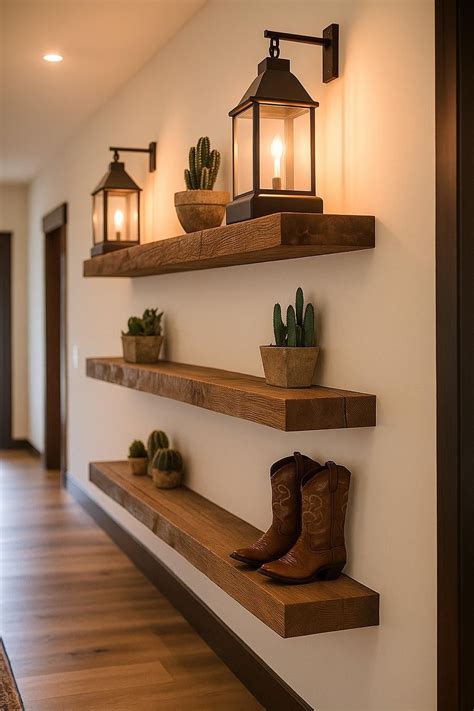
Rustic wooden shelves introduce warmth and organic texture to living rooms, kitchens, and dining spaces. These projects typically rely on readily available lumber like pine, oak, or reclaimed scaffold boards, which can be easily sanded and stained to match your preferred interior palette. Pairing raw wood planks with matte black iron brackets creates an instant farmhouse aesthetic that feels both timeless and grounded.
To execute a classic rustic shelf, select a board with desirable knots and grain patterns, apply a rich walnut or weathered oak stain, and seal it with a durable polyurethane finish. When mounting these heavier wooden boards, anchoring them directly into wall studs provides the highest level of stability. If studs do not align with your ideal layout, heavy-duty toggle bolts designed for drywall can safely support moderate loads.
Modern Minimalist and Geometric Shelving Concepts
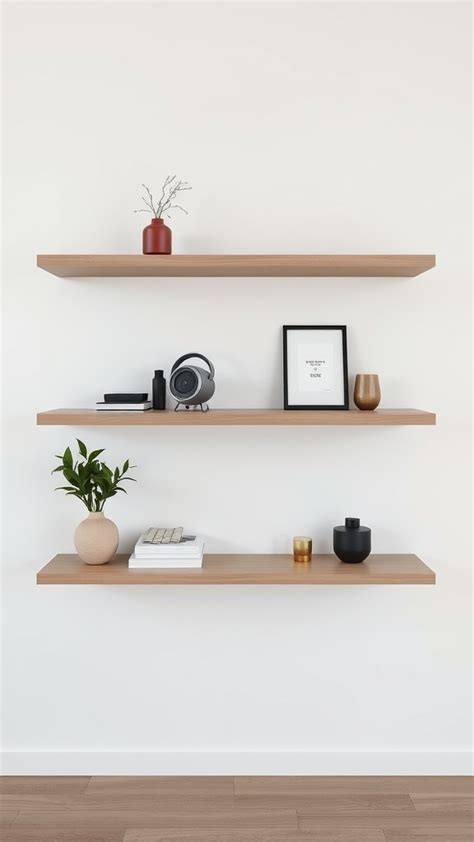
If your design style leans toward contemporary lines and understated elegance, minimalist and geometric shelving offers a striking visual focal point. These designs often utilize thin profile steel rods, leather hanging straps, or floating bracket systems that make the storage surface appear as though it is magically hovering against the wall.
Creating a floating box shelf or a triangular geometric frame requires basic miter cuts and wood glue, but the resulting geometric shadow boxes turn ordinary storage into functional wall art. Styling these modern ledges requires restraint; limiting your display to a few curated ceramics, a small framed print, and a single sculptural object keeps the composition clean and intentional.
Renter-Friendly and Damage-Free Display Options
Renters often face strict lease limitations regarding wall anchors and large drill holes, but decorative display does not have to take a backseat. Innovative damage-free solutions allow you to enjoy elevated shelving without risking your security deposit or spending hours patching drywall upon moving out.
Adhesive-backed picture-ledge systems and tension-mounted upright shelves provide stable platforms for lightweight items like paperback books, picture frames, and small succulents. Alternatively, leaning ladder shelves utilize gravity rather than wall fasteners to provide multiple tiers of display space, offering complete mobility and zero permanent installation requirements.
Frequently Asked Questions
What are the best beginner-friendly DIY wall shelf ideas?
For absolute beginners, simple hanging board shelves suspended by sturdy cotton rope or leather straps require minimal tools and zero complex woodworking skills. Pre-cut lumber from local hardware stores eliminates the need for power saws, allowing you to focus purely on sanding, finishing, and hanging.
How do you hang heavy wall shelves safely without studs?
When wall studs are not available where you want your shelf, standard plastic wall anchors will not support heavy loads. Instead, use heavy-duty toggle bolts or expanding metal hollow-wall anchors rated for the specific weight of your shelving and its intended contents.
What supplies do I need to build a basic wooden wall shelf?
A basic wooden wall shelf typically requires a solid wood board, two metal or wooden brackets, matching wood screws, wall anchors or studs screws, a power drill, a level, and a sanding block for smoothing rough edges.


