Designing a comfortable, functional living room in an American home often starts with the anchor pieces: the sofa and seating arrangement. When you bring home an armchair reclining sofa set, you are prioritizing deep relaxation, family movie nights, and versatile hosting spaces. However, combining a full-size reclining sofa with a complementary armchair requires careful thought regarding square footage, traffic flow, and mechanical clearances. American living rooms range from compact urban apartments to sprawling suburban open-concept layouts, meaning there is no universal setup that works for every household.
Successfully integrating these plush, motion-heavy pieces into your home involves analyzing how your household actually uses the room on a daily basis. Do you frequently host guests who need conversational seating, or is the space dedicated to weekend lounging and television viewing? By balancing physical dimensions, upholstery durability, and the choice between manual and power reclining mechanisms, you can curate a cohesive seating arrangement that enhances both visual appeal and daily comfort for years to come.
Spatial Planning and Layout Strategies for U.S. Living Rooms
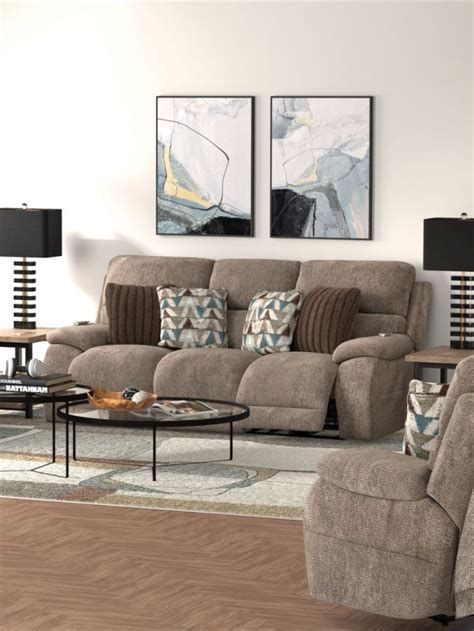
Before browsing furniture catalogs or visiting showrooms, you must map out the exact dimensions of your living room. Reclining furniture requires substantially more operational footprint than stationary sofas because the footrests extend outward and the backs tilt backward. In a typical suburban family room, floating the reclining sofa away from the walls creates an inviting conversation pit, provided you leave at least three feet of walking clearance around the perimeter. For tighter urban apartments, wall-hugger reclining mechanisms offer a smart alternative, shifting forward on a track so they can sit mere inches from a wall without scraping the drywall.
Traffic flow is another critical consideration that homeowners frequently overlook during the layout phase. Ensure that when the sofa and matching armchair are fully reclined, they do not block entryways, hallway paths, or access to media consoles and side tables. Using painter’s tape on your living room floor to outline the exact footprint of the extended recliners helps visualize potential bottlenecks. Remember to account for swing space if your armchair features a swivel or rocking base, ensuring it has adequate clearance to turn freely without bumping into neighboring furniture.
Evaluating Upholstery Materials: Performance Fabrics vs. Leather
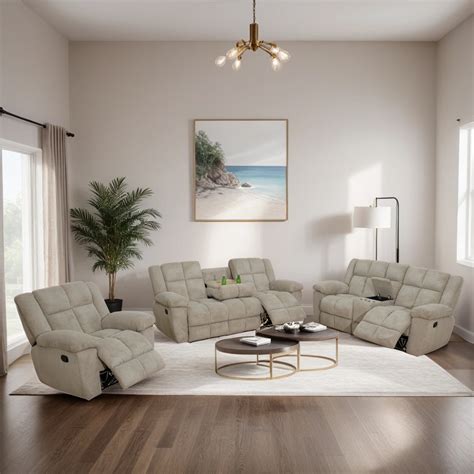
The longevity of an armchair reclining sofa set depends heavily on the fabric or hide you select to withstand daily family life. Performance fabrics, such as treated microfibers and tightly woven synthetic blends, have become popular choices for U.S. households with children and pets. These textiles feature moisture-repellent barriers that prevent accidental spills from soaking into the cushion foam, making cleanup as simple as blotting with a damp cloth. They also resist snagging from pet claws far better than traditional loose-weave linens or delicate cotton velvets.
Conversely, genuine leather and high-grade faux leather bring a timeless, sophisticated aesthetic to a living room while offering their own distinct maintenance profile. Leather naturally adapts to room temperature fairly quickly and develops a rich, supple patina over time with proper conditioning. While genuine leather is durable and resists pet hair accumulation, it can scratch under aggressive cat claws and requires specialized cleaning products to prevent drying and cracking. When weighing these options, assess your household’s climate, cleaning habits, and lifestyle realities rather than choosing solely based on showroom appearance.
Choosing Between Manual and Power Reclining Mechanisms
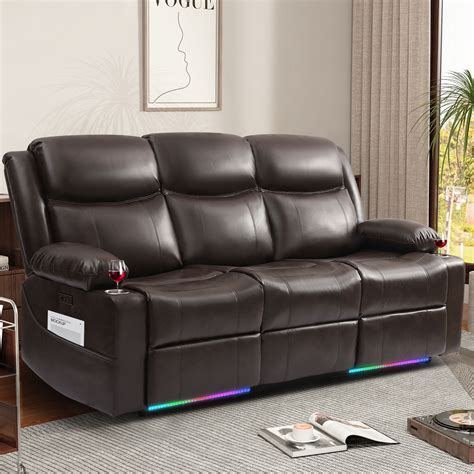
One of the most consequential decisions you will make when purchasing a reclining set is selecting the operating mechanism. Manual recliners rely on an internal spring-loaded latch or pull-handle system, requiring physical force to push the footrest down and lock it into place. These traditional models are generally more budget-friendly, simpler to repair, and do not depend on nearby electrical outlets or battery packs, making furniture placement much more flexible regardless of wall plug locations.
Power recliners, on the other hand, utilize quiet electric motors controlled by discreet side buttons or touch panels. They allow for infinite micro-adjustments, letting you pause the footrest and back angle at any exact position that relieves lower back pressure. Many modern power sets also incorporate integrated USB charging ports and adjustable headrests or lumbar support. While they carry a higher upfront cost, require power cords, and involve more complex mechanical maintenance, the effortless operation and customizable ergonomics make them a worthwhile investment for daily relaxation.
Styling Your Set: Matching Armchairs vs. Mix-and-Match Aesthetics
Deciding whether to buy a uniform, matching set or curate a custom mix-and-match arrangement defines the overall character of your living room. A matching reclining sofa and armchair set creates an immediate sense of symmetry, order, and traditional elegance. This approach works exceptionally well in formal suburban living rooms where a cohesive color palette and uniform leather or fabric texture anchor the entire space.
However, mixing and matching seating styles can prevent your living room from looking like a rigid furniture showroom. You might pair a neutral gray performance fabric reclining sofa with a contrasting leather armchair or an accent chair featuring exposed wooden legs. This eclectic approach adds visual depth, texture, and personality to the room. To tie disparate pieces together successfully, ensure that the seat heights are relatively compatible and repeat at least one accent color through throw pillows, area rugs, or window treatments across the entire seating zone.
Frequently Asked Questions
How much space do I need to leave behind a reclining sofa?
Traditional reclining sofas require anywhere from 3 to 12 inches of clearance behind the backrest to recline fully without hitting the wall. If your room is tight on space, look specifically for “wall-hugger” or “zero-wall” reclining models, which slide forward as they recline and can operate successfully placed just 2 to 4 inches away from a wall.
Should I choose a matching armchair or mix and match?
Choosing a matching armchair provides instant visual harmony and is ideal for traditional or structured room designs. Mixing and matching styles, textures, or colors adds personality and prevents a showroom feel. If you mix pieces, tie them together with complementary throw pillows, matching wood tones on nearby tables, or a unified color palette.
Are power recliners worth the extra cost compared to manual ones?
Power recliners are often worth the investment if you value precise ergonomic positioning, effortless operation, and built-in modern conveniences like USB charging ports or power headrests. Manual recliners are better suited if you want a lower upfront cost, simpler maintenance, and freedom from needing nearby electrical outlets.
What fabrics hold up best against pets and daily family use?
Performance fabrics, such as heavy-duty microfiber, crypton, and tightly woven synthetic blends, offer exceptional resistance to stains, moisture, and pet claws. Genuine top-grain leather is also very durable and easy to wipe clean of hair and dust, though it can be susceptible to scratching from sharp animal claws if not properly maintained.


