The living room serves as the emotional heart of an American home. Whether you are settling into a sprawling suburban house or arranging a compact urban apartment, cultivating a welcoming atmosphere requires a thoughtful balance of layout, lighting, and texture. A genuinely inviting space avoids the rigid feel of a furniture showroom, instead offering comfort, tactile richness, and a layout that naturally encourages conversation and relaxation. Achieving this look does not demand a complete architectural overhaul or an extravagant budget; rather, it relies on purposeful styling decisions that prioritize human comfort above rigid design rules.
When approaching living room design in the United States, homeowners and renters alike often navigate distinct architectural challenges. Spacious rooms can easily feel cold or disconnected if furniture floats without purpose, while smaller apartments require smart scaling and multi-functional pieces to prevent clutter. By focusing on fundamental design elements—such as cozy textile layering, warm ambient lighting, and intimate seating configurations—you can easily establish a cohesive environment tailored to your specific square footage and daily lifestyle.
Mastering Furniture Layout for Natural Flow and Conversation
An inviting living room begins long before you select paint colors or decorative pillows; it starts with the floor plan. In many American homes, the living area opens directly into the kitchen or entryway, creating an expansive open-concept layout that can sometimes feel ungrounded. To combat this, pull your primary seating furniture slightly away from the walls rather than pushing every piece against the perimeter. This simple adjustment creates a warm conversational zone that feels intimate rather than cavernous, establishing a natural pathway for people to move comfortably through the room.
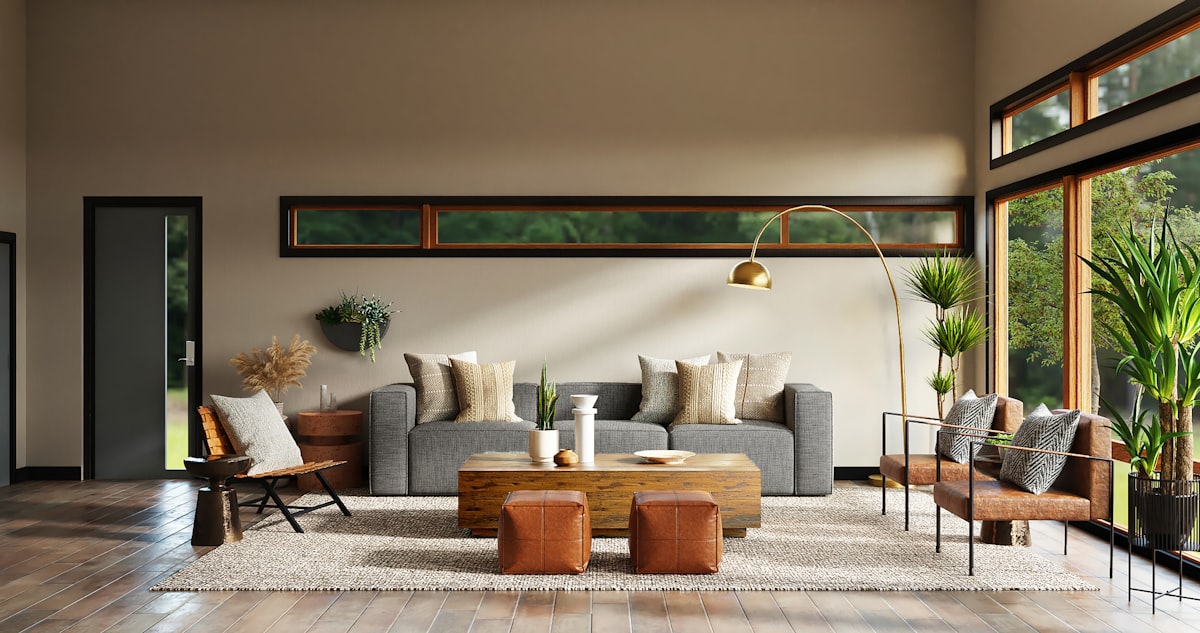
For apartment dwellers or those dealing with compact footprints, floating furniture might not always be practical due to spatial limits. In these cases, anchoring the seating arrangement with a properly sized area rug is essential. The rug should be large enough to fit at least the front legs of your sofa and armchairs, visually defining the living zone within a multi-purpose room. Maintain clear walking paths of at least thirty inches around major furniture pieces so the room functions smoothly during family gatherings or casual evenings in.
Layering Textiles for Unmatched Visual and Tactile Warmth
Nothing transforms a stark living room into a welcoming retreat quite like the strategic layering of textiles. Hard flooring, leather upholstery, and smooth drywall surfaces can sometimes create a clinical aesthetic if left balanced only by minimalist decor. Introduce sensory warmth by combining contrasting fabrics such as heavy woven cottons, plush velvets, chunky wool knit blankets, and faux-fur accent pillows. These varied textures invite touch and instantly make the room feel lived-in, comfortable, and deeply relaxing.
Window treatments also play a profound role in softening a living room’s overall architecture. Hanging sheer linen or textured cotton drapery slightly higher and wider than the actual window frame draws the eye upward, making the ceiling feel taller while diffusing harsh natural light into a soft, golden glow. For renters who cannot install permanent hardware, tension rods or damage-free hanging solutions offer an effective workaround to achieve the same architectural elegance without risking security deposits.
Crafting an Inviting Ambiance Through Warm Lighting Strategies
Overhead lighting alone rarely creates a welcoming atmosphere. Relying exclusively on bright central ceiling fixtures can cast harsh shadows and make even the most beautifully decorated room feel sterile. Instead, design a layered lighting scheme using a combination of floor lamps, table lamps, and wall sconces placed at different heights throughout the space. Warm-toned LED bulbs—typically between 2400K and 2700K—replicate the gentle glow of traditional incandescent lighting, fostering a soothing mood ideal for evening relaxation.
Incorporating accent lighting can highlight architectural focal points or cozy reading nooks. Placing a dimmable floor lamp beside an armchair instantly signals a functional invitation to sit down with a book. If your apartment lacks built-in overhead lighting entirely, plug-in wall sconces mounted with adhesive command strips or simple hardware provide a renter-friendly way to introduce stylish illumination at eye level, balancing the room’s visual weight.
Personalizing Your Space with Meaningful Decor and Art
A truly welcoming living room reflects the personalities and lived experiences of the people who inhabit it. Avoid relying solely on mass-produced decorative items that lack narrative depth. Instead, curate your shelves and tabletops with items that tell a story—such as vintage ceramic vessels, collected travel souvenirs, stacked hardback books, and framed personal photography. These thoughtful details spark conversation and infuse the room with a distinct character that generic retail styling simply cannot replicate.
Wall art serves as another powerful tool for establishing the room’s color palette and emotional tone. Large-scale abstract canvases or framed botanical prints can fill blank drywall effectively, while renters can use gallery wall ledges or heavy-duty adhesive strips to display favorite pieces without causing wall damage. Balance your decorative displays by leaving some breathing room on shelves and coffee tables; negative space ensures that your favorite focal pieces receive the visual appreciation they deserve without overwhelming the eye.
Frequently Asked Questions
How can I make a large open-concept living room feel cozy?
To warm up a large open-concept space, avoid pushing all your furniture against the walls. Create an intimate conversation area by floating your sofa and armchairs inward, anchored by a large area rug. Use warm wood tones, layered textiles like chunky knit throws, and multiple floor lamps to break up the vast scale and add visual intimacy.
What are some renter-friendly ways to decorate a living room?
Renters can easily personalize their living rooms without violating lease agreements. Use large area rugs to cover unappealing flooring, hang drapery using damage-free rods or tension systems, and display art using heavy-duty adhesive strips or picture ledges. Additionally, rely on freestanding bookshelves, stylish table lamps, and varied textiles to inject personality and warmth.
How do I arrange furniture for optimal traffic flow in a compact apartment?
In a smaller apartment living room, choose multi-functional furniture such as storage ottomans or nesting coffee tables. Keep primary walking paths unobstructed by positioning larger pieces against walls or using scaled-down apartment-sized sofas. Ensure there is at least two to three feet of clearance around doorways and main pathways to maintain a breathable layout.
What is the best lighting color temperature for a cozy living room?
For a warm and inviting atmosphere, choose LED light bulbs with a color temperature between 2400K and 2700K. This range emits a soft, golden-yellow hue reminiscent of traditional incandescent bulbs, which naturally relaxes the eye and makes indoor spaces feel intimate and comfortable.


