Blank walls present a wonderful design opportunity, but filling them with custom furniture can quickly strain your wallet. Fortunately, building your own wall storage offers an incredible way to introduce character, warmth, and organization into your living spaces without spending a fortune. Whether you live in a suburban house or an urban rental apartment, incorporating handmade storage solutions allows you to customize dimensions and finishes to match your exact aesthetic preferences.
When planning your wall storage projects, balancing visual appeal with structural integrity remains crucial. Many beginners focus entirely on the aesthetic finish while overlooking weight limits or wall anchors, which can lead to damaged drywall or sagging boards over time. This guide explores ten distinct, budget-friendly shelving concepts, addressing everything from temporary renter-friendly fixtures to robust industrial brackets so you can create safe, stunning displays in any room.
1. Minimalist Leather Strap Hanging Shelves
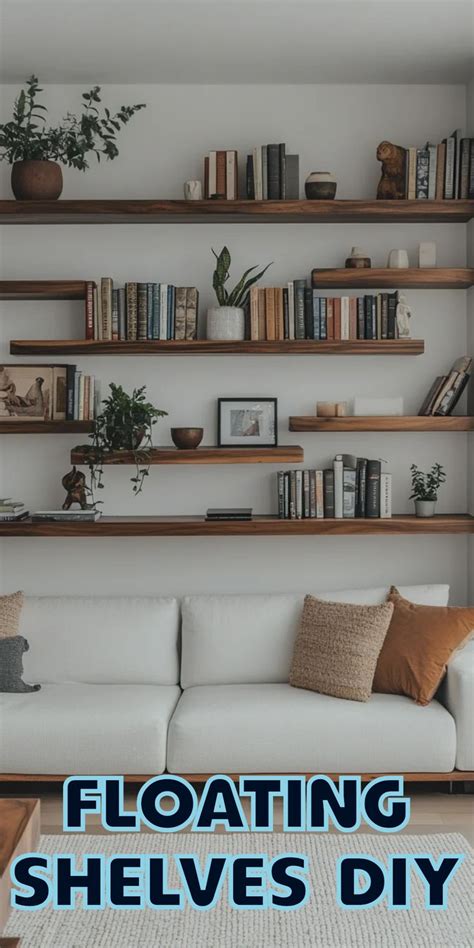
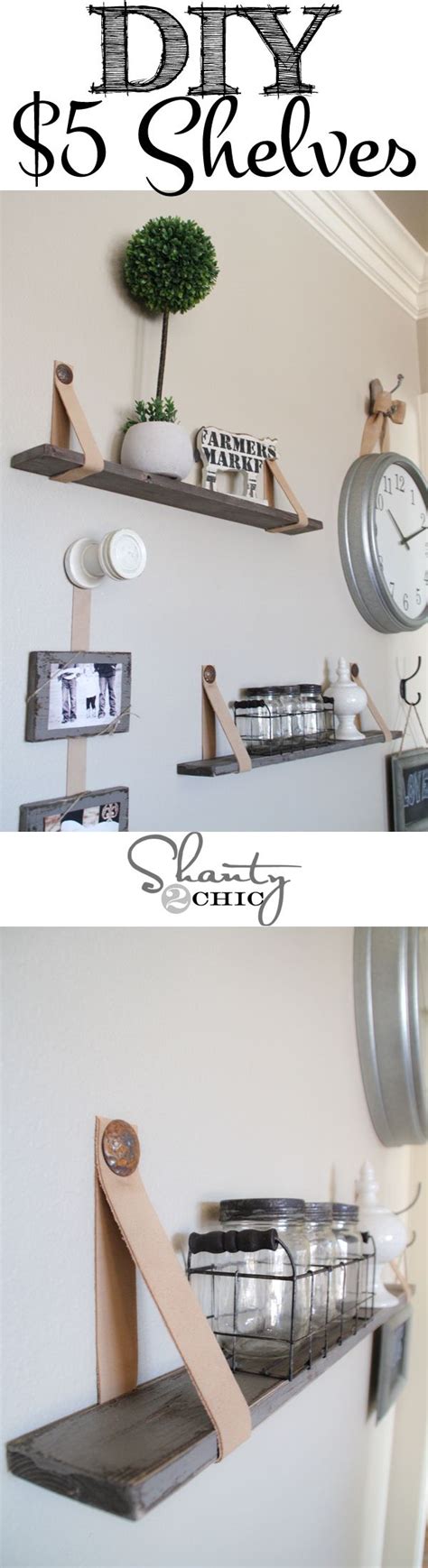
Leather strap shelves deliver a sophisticated, organic look that bridges modern minimalism and rustic charm. By suspending a smooth pine or oak board from two looped leather strips anchored to the wall, you create a lightweight accent piece that looks far more expensive than it actually is. This project is exceptionally beginner-friendly and requires only a few basic materials: a wooden board, scraps of heavy-duty leather or faux leather, matching screws, and wall anchors.
To assemble this look, cut your leather straps to the desired loop length, fold each strip in half, and screw the ends directly into the wall through a pre-drilled pilot hole. Slide your wooden board snugly through the suspended loops, ensuring the board remains balanced and level. While these shelves excel at displaying trailing houseplants, framed art, or lightweight ceramics, remember that their weight capacity is limited by the strength of the straps and wall anchors, making them best suited for decorative items rather than heavy book collections.
2. Industrial Pipe and Sawn Lumber Brackets
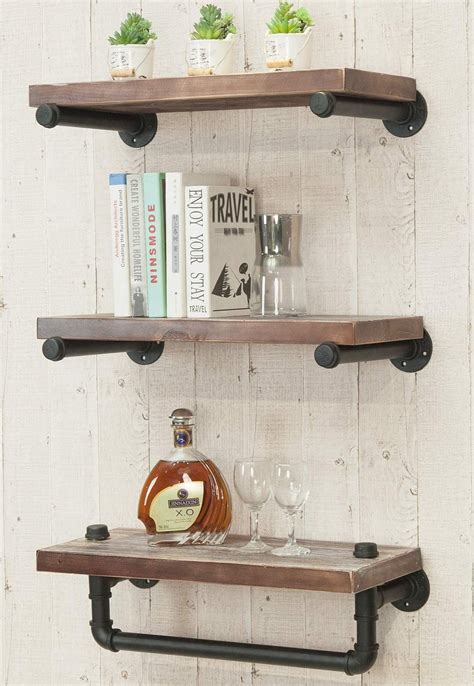
If your home leans toward industrial, urban, or transitional decor, combining galvanized steel pipes with thick wooden boards creates a striking architectural statement. You can source standard iron plumbing pipes and flanges from any local hardware store, spray-painting them matte black or leaving them in their raw metallic finish for an authentic workshop aesthetic. Pair these sturdy metal supports with reclaimed scaffold boards or sanded whitewood planks for a warm contrast against the dark hardware.
Installing industrial pipe shelves requires locating your wall studs to support heavy loads securely, as these units are frequently used to store heavy hardback books or dinnerware collections. Begin by screwing the wall flanges firmly into the studs, thread the horizontal pipe segments and elbows into place, and lay your stained wooden board across the supports. Secure the wood to the underside of the pipe fittings with short wood screws to prevent sliding, resulting in an exceptionally robust storage solution that will last for decades.
3. Renter-Friendly Command Hook Shelving Alternatives
For apartment dwellers and renters who face strict lease restrictions regarding nail holes and wall damage, traditional shelving installations are often out of the question. However, innovative heavy-duty adhesive hooks and hook-and-loop fastening systems make it possible to hang ultra-lightweight display ledges without driving a single screw into the drywall. Using balsa wood or lightweight foam core wrapped in contact paper, you can construct shallow display ledges designed specifically for postcards, lightweight frames, and small trinkets.
When utilizing adhesive mounting strips, surface preparation is the absolute key to success. Clean the wall thoroughly with rubbing alcohol to remove dust and grease, press the adhesive strips firmly according to the manufacturer guidelines, and wait the recommended curing hour before placing any weight on the ledge. While these temporary shelves cannot support heavy items, they provide an effortless, damage-free way to refresh gallery walls and display seasonal decor without risking your security deposit.
4. Geometric Plywood Accent Shelves

Plywood is one of the most versatile and economical building materials available, making it ideal for crafting eye-catching geometric wall units. By cutting plywood into uniform triangles, hexagons, or interlocking squares, you can assemble modern honeycomb shelving units that serve as both wall art and functional storage. A simple miter saw or even a hand saw can handle the cuts, while wood glue and finishing nails hold the geometric frames together securely.
Painting or staining the interior panels a contrasting color while leaving the exterior edges natural creates a stunning dimensional effect. Because these geometric clusters are often lightweight, you can mount them using small picture-hanging hardware attached to the back frame. They work wonderfully in living rooms or home offices for organizing small succulents, crystals, or curated collectibles, adding architectural interest to plain drywall with minimal effort and cost.
5. Repurposed Wooden Crate Wall Storage
Wooden fruit crates or vintage wine boxes offer an immediate shortcut to rustic charm, functioning as ready-made box shelves with built-in depth. Instead of discarding old crates or buying expensive shadow boxes, you can sand down rough edges, apply a protective clear coat or wood stain, and mount them directly to the wall either individually or in a clustered mosaic pattern.
To secure a wooden crate safely, drive heavy-duty screws with large washers through the thick back slats directly into wall studs or heavy-duty drywall anchors. You can enhance the interior of the crates by lining the back panels with patterned wallpaper or leftover fabric remnants for a pop of color and pattern. These deep box shelves provide fantastic functional storage in entryways for mail and keys, or in children’s rooms for organizing small toys and picture books.
Frequently Asked Questions
How do I make sure my DIY shelves are completely level before securing them?
Always use a spirit level placed directly on top of your wooden board or mounting brackets before marking your final screw locations on the wall. For multi-bracket shelves, measure the exact distance from the floor or ceiling at both ends to verify the height is consistent across the entire span.
What is the most affordable type of wood to buy for DIY shelving projects?
Standard whitewood, pine boards, and construction-grade plywood are generally the most budget-friendly lumber options at local home improvement stores. You can easily elevate their appearance by applying a rich wood stain and a protective polyurethane topcoat.
Can I install heavy wooden shelves on drywall without finding a stud?
While you can use heavy-duty toggle bolts or expanding drywall anchors for moderate weights, any shelf intended to hold heavy books or large ceramic pieces must be anchored directly into wooden wall studs to prevent failure.
How can renters create storage without violating lease agreements?
Renters can utilize heavy-duty adhesive strips designed for picture hanging, freestanding leaning ladder shelves, or tension-rod shelving units that require zero wall penetration while still offering functional vertical organization.