Updating your living room wall configuration does not require an expensive custom cabinetry budget or professional contractors. Crafting your own shelving gives you absolute control over wood species, dimensions, and wall placements, making it one of the most rewarding home improvement projects. Whether you are working with standard drywall over wooden studs in a suburban house or dealing with strict lease agreements in a compact city apartment, the right DIY shelving project transforms empty walls into functional focal points.
Successfully executing a shelving project starts with understanding your wall construction. In typical American residential construction, wall studs are spaced sixteen inches apart center-to-center. Securing at least one heavy bracket directly into a stud ensures structural stability for books and heavy ceramics, while specialized toggle anchors provide reliable hold when studs are not ideally aligned with your layout.
1. Modern Minimalist Floating Shelves
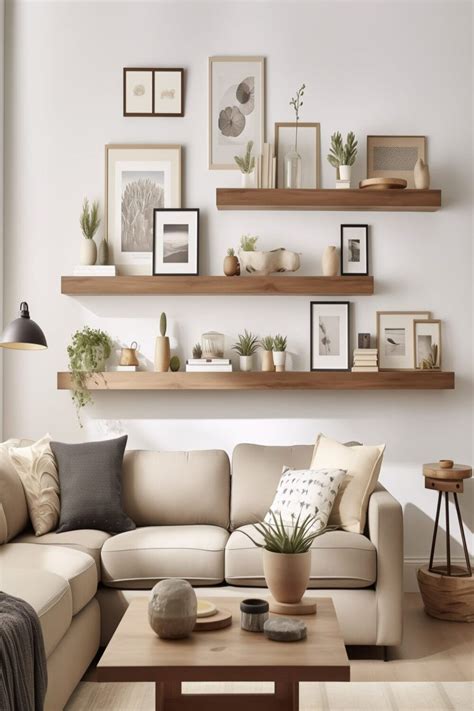
Clean lines and concealed hardware define modern minimalist floating shelves, offering a seamless architectural look that keeps small living rooms feeling open and uncluttered. By hiding the internal mounting bracket entirely within a hollow or notched piece of lumber, the finished shelf appears to defy gravity while securely holding your favorite decorative objects.
Building these requires dimensional lumber, typically oak or maple, cut to precise lengths alongside heavy-duty internal metal plates. To achieve a professional finish, sand the wood thoroughly through multiple grit progressions before applying a clear matte polyurethane or a warm natural wood stain that complements your existing living room flooring.
2. Rustic Reclaimed Wood Bracket Shelves
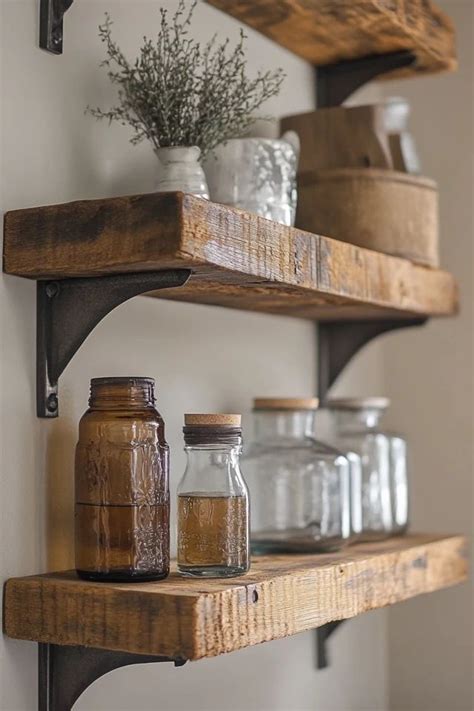
If your living room leans toward farmhouse, transitional, or bohemian aesthetics, incorporating rustic reclaimed wood shelves brings warmth, texture, and historical character into the space. Sourcing old barn wood or salvaged lumber provides unique grain patterns and imperfections that manufactured store-bought boards simply cannot replicate.
Pair these substantial wooden planks with matte black iron brackets or vintage brass supports to anchor the design visually against neutral drywall. When styling these heavier rustic shelves, balance the visual weight by grouping vertical hardcover books on one end alongside a trailing pothos plant or a ceramic vase on the other.
3. Renter-Friendly Adhesive and Tension Solutions
Renters often face the challenge of updating their living rooms without risking their security deposits through excessive drywall patching. Fortunately, modern home improvement offers innovative ways to display decor without drilling permanent holes, including heavy-duty adhesive mounting tracks and tension-pole shelving systems.
Adhesive ledge systems work exceptionally well for lightweight displays such as framed family photographs, small art prints, and lightweight succulents. Always verify the manufacturer weight limits before loading any rental-safe shelf, and use proper removal techniques, such as gently pulling stretch-release adhesive strips parallel to the wall, to preserve the paint finish entirely.
4. Industrial Iron Pipe Wall Units
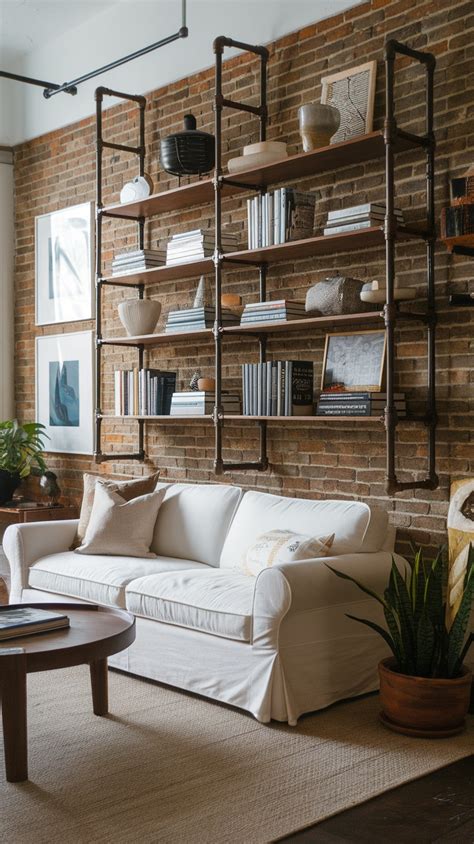
Industrial style remains a popular choice for urban lofts and contemporary suburban homes alike, combining raw structural steel elements with warm wood tones. Building a multi-tier shelving unit using standard black iron gas pipes and flanges creates a rugged, highly durable display capable of handling massive book collections and electronics.
Assembly involves threading pre-cut pipes into floor flanges, elbows, and tees, then securing the entire framework firmly to wall studs. Staining pine or fir boards in a dark walnut shade provides a striking contrast against the dark metallic finish of the plumbing pipes, instantly elevating the room with a bespoke, architectural feel.
5. Corner Shelving Solutions for Small Spaces
Unutilized room corners represent some of the most valuable yet neglected real estate in typical American living room layouts. Installing custom triangular or quadrant floating shelves transforms awkward corners into efficient display areas for small sculptures, trailing plants, or ambient lighting fixtures.
Because corner installations anchor into two adjacent walls, they naturally benefit from enhanced structural stability compared to single-wall spans. Use a reliable digital stud finder to locate framing members on both walls before fastening the corner brackets, ensuring your display remains safe and level over years of daily use.
6. Stylish Leather Strap Shelves
Leather strap shelving introduces a tactile, organic element that softens hard living room surfaces while providing an effortless bohemian flair. By looping sturdy strips of full-grain leather or heavy saddle belting around a polished hardwood board and fastening them directly to the wall, you create a lightweight hanging shelf that is remarkably simple to construct.
When measuring leather straps, remember to account for the thickness of your wood board and allow enough length for double-layer attachment loops. Secure the strap ends to wall anchors using decorative brass screws or brass washers to create a polished, hardware-accented finish that catches the eye without overwhelming surrounding wall art.
7. Stacked Wooden Crate Wall Displays
Upcycling wooden crates into modular wall storage is a budget-friendly way to introduce rustic charm and deep compartment shelving into a family living room. These pre-assembled boxes can be arranged in asymmetrical grids, staggered honeycombs, or uniform rows to fit virtually any blank wall space above a sofa or console table.
Before mounting crates to the wall, reinforce their internal corner joints with wood glue and small brad nails to handle heavier items like hardback novels and framed artwork. Sand down any rough splinters on the pine slats and finish the boxes with a coat of transparent wax or neutral chalk paint to match your color palette.
8. Shadow Box Gallery Shelves
Shadow boxes combine the protective nature of picture frames with the functional display capacity of traditional wall shelves, making them ideal for showcasing delicate sentimental objects, travel souvenirs, or sculptural pottery. Building a shallow rectangular box with a closed back panel isolates your curated items, turning ordinary curiosities into gallery-worthy focal points.
Construct the outer frame using mitered joints for clean corners, and paint or wallpaper the interior back panel to create a high-contrast backdrop. Recessed hanging hardware installed on the back makes flush wall mounting secure and straightforward, ensuring the shadow box sits completely flat against your living room drywall.
9. Modular Pegboard Wall Systems
For homeowners and renters who love rearranging their living room layout frequently, a full-scale wooden pegboard wall system offers unmatched versatility. By mounting a large sheet of hardwood plywood punched with uniform holes, you can insert removable wooden dowels to support adjustable floating shelves wherever you need them.
Drilling clean, splinter-free holes requires a sturdy drill press or a precise vertical dowelling jig combined with a Forstner bit. Seal the entire pegboard panel with a durable satin varnish to prevent scuffing from interchangeable shelves, allowing you to reconfigure your plants, books, and decorative objects seasonally without pulling out tools.
10. Live-Edge Organic Slabs
Live-edge wood slabs preserve the natural, unaltered contours of a tree trunk, bringing raw organic beauty and majestic focal points into contemporary living spaces. Choosing a single statement live-edge shelf made from walnut, maple, or cedar instantly draws the eye and anchors an empty feature wall with natural texture.
Preparation involves debarking the edges, smoothing out natural cambium layers, and filling any minor wood checks with clear epoxy resin for a smooth tactile finish. Because live-edge slabs tend to be irregular in thickness and heavy in weight, always pair them with heavy-duty steel bar brackets anchored securely into structural studs.
11. Geometric Plywood Cubbies
Geometric shelving units—such as interlocking hexagons, triangles, or diamonds—inject dynamic modern geometry and playful visual rhythm into sterile living room walls. Fabricating these intricate shapes requires precision miter cuts on a table saw, but the striking architectural payoff is well worth the layout effort.
Assemble the geometric shapes using exterior wood glue and painter’s tape to hold the miter joints tightly in place while curing. Once dry, mount several modular shapes together in an overlapping cluster, creating integrated display surfaces across both the interior bases and exterior tops of the frames.
12. Floating Picture Ledge Galleries
Picture ledges feature a narrow groove or raised lip along the front edge, making them the ultimate DIY project for displaying rotating art prints, family portraits, and small decorative accessories without risking frame slippage. Building a shallow profile ledge takes only a few pieces of trim molding and a simple 1×3 baseboard.
Attach the front lip securely to the base board using wood glue and finish nails before mounting the complete assembly to your wall studs. This shallow design projects only a few inches into the room, making it an ideal shelving solution for narrow living room walkways or tight wall spaces beside doorways.
13. Recessed Wall Niche Shelving
For an advanced, custom-built architectural look, cutting into open wall cavities to create recessed niche shelving provides flush storage that does not protrude into your living room at all. Framing out between vertical studs allows you to build clean wooden boxes that sit entirely flush with the surrounding drywall surface.
Before cutting into any drywall, always inspect the wall cavity for electrical wiring, plumbing supply lines, or HVAC ductwork using a professional scope and electronic detector. Once the rough opening is framed and patched, install interior accent lighting or beadboard backing to turn a hidden structural cavity into a stunning illuminated display nook.
Frequently Asked Questions
What are the best materials for beginner DIY living room shelves?
Pre-sanded dimensional pine, poplar, or common oak boards are ideal for beginners because they are readily available at local hardware stores and easy to cut, sand, and stain.
How do I ensure my DIY shelves are completely level?
Always use a reliable 24-inch or longer spirit level across your shelf brackets before driving final fasteners into wall studs, and double-check measurements from the floor rather than the ceiling.
What is the safest way to support heavy books on floating shelves?
Use heavy-duty steel rod brackets that anchor directly into wooden wall studs, and ensure your wooden boards are at least 1.5 to 2 inches thick to prevent sagging over time.
How can renters install shelves without damaging drywall?
Renters can utilize heavy-duty adhesive mounting tracks, tension-pole systems, or over-the-door hanging brackets that support lightweight decor without drilling permanent holes into structural walls.


