Outfitting a new apartment or first home often comes with a common design dilemma: needing plenty of functional vertical storage without breaking your budget or leaving permanent holes in drywall. Traditional retail shelving units can quickly become expensive, and standard installation methods often overwhelm beginners who lack specialized woodworking tools. Fortunately, crafting your own storage solutions offers an affordable, highly customizable alternative that lets you express your personal design style while working within strict spatial or lease limitations.
When you approach shelving as a creative weekend project, you can easily source affordable materials from local home improvement centers like Home Depot or Lowe’s, or repurpose everyday objects into unique statement pieces. Whether your aesthetic leans toward clean minimalist floating lines, warm rustic wood tones, or industrial metal accents, building your own display spaces gives you complete control over dimensions, finishes, and weight capacities. Below, we explore practical concepts and installation strategies designed specifically for young decorators seeking maximum impact with minimal hassle.
Renter-Friendly No-Drill Shelving Concepts
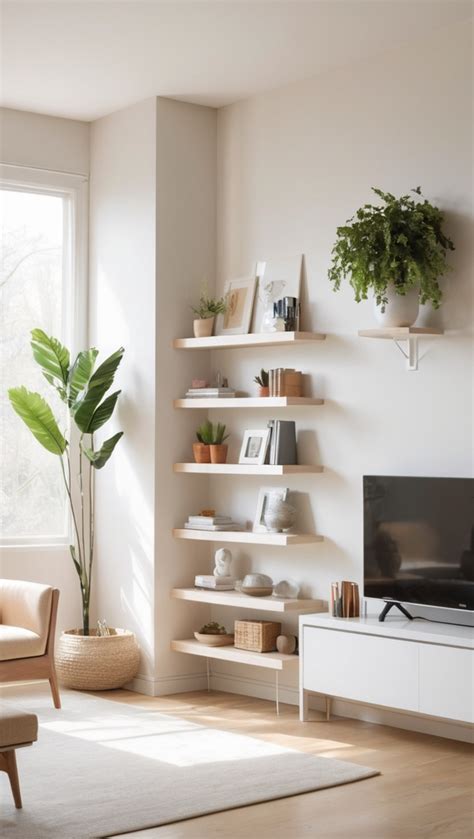
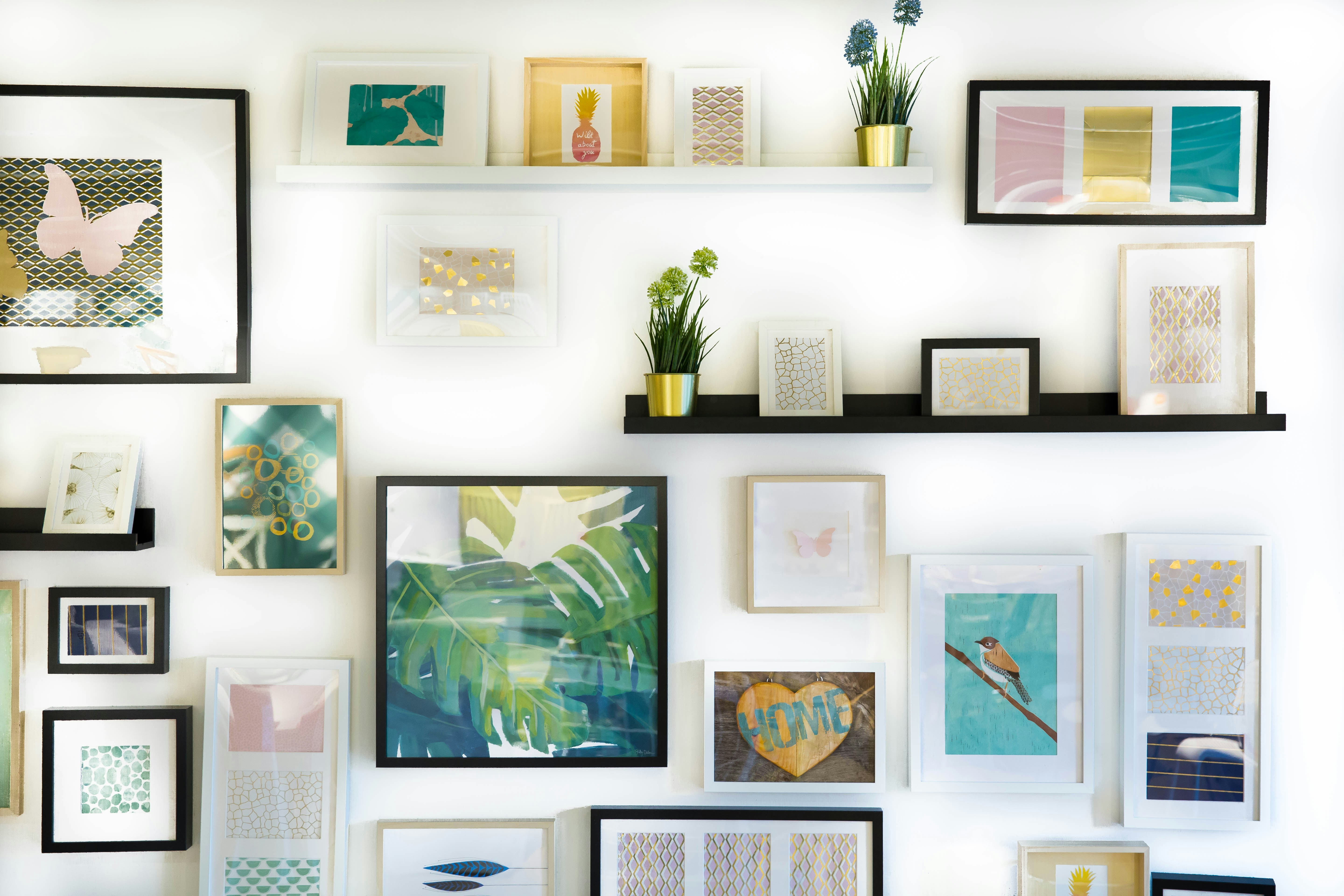
For apartment renters, the fear of losing a security deposit over wall damage often stops home decor projects in their tracks. Fortunately, modern adhesive technology and clever tension designs make it entirely possible to enjoy elevated wall storage without picking up a power drill. Heavy-duty mounting strips and specialized picture-hanging hooks rated for specific weights can support lightweight ledges carrying small plants, framed art, and paperback books.
Another excellent renter-safe approach is utilizing leaning ladder shelves or freestanding tension poles that wedge securely between the floor and ceiling without driving a single screw into the drywall. These units provide multiple tiers of open storage that you can easily take down and reconfigure whenever you decide to move. When evaluating these options, always pay close attention to manufacturer weight limits and distribute your heavier items evenly across the lower tiers to maintain overall stability.
Upcycled and Budget-Friendly Material Ideas
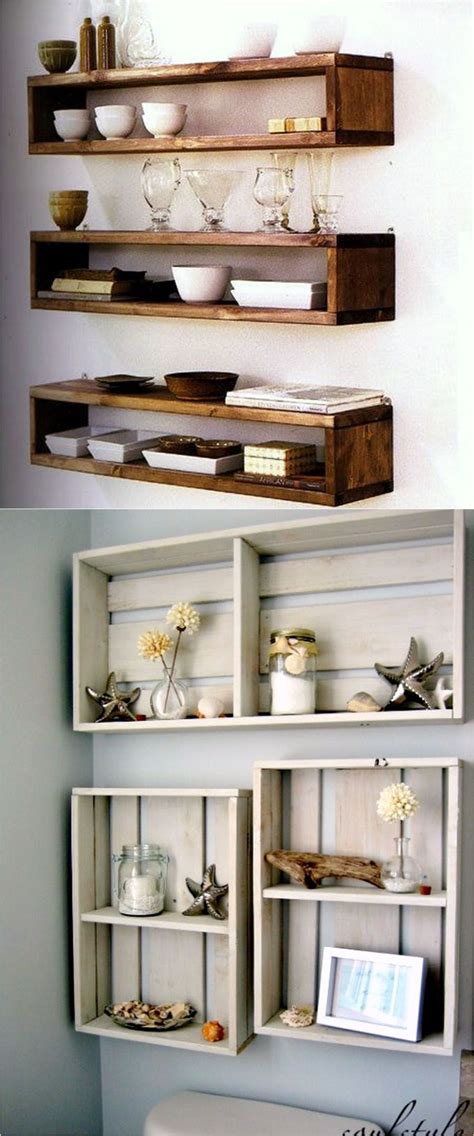
If you want to keep material costs under twenty dollars while adding distinct character to your rooms, look toward upcycling and unconventional building supplies. Wooden wine crates stacked and secured together create modular cubby shelves with an instant rustic appeal, perfect for organizing entryway clutter or displaying vinyl records. A simple sanding and a coat of matte paint or clear polyurethane can instantly elevate rough shipping crates into high-end accent furniture.
For a sleek modern bohemian look, consider hanging a smooth pine board from sturdy leather straps anchored to a single wall stud. This approach softens the harsh lines typical of metal brackets and brings organic texture into your living room or bedroom. Similarly, reclaimed scaffold boards paired with simple iron pipes offer an industrial aesthetic that looks far more expensive than the actual price of the raw components.
Working with budget materials requires patience during the preparation phase, especially when it comes to sanding away rough edges and applying protective finishes. Taking extra time to seal raw wood prevents moisture damage and makes dusting much easier in high-traffic areas like kitchens and bathrooms. Always measure your available wall space twice before cutting any lumber to ensure your finished piece fits comfortably alongside your existing furniture layout.
Essential Tools and Hardware Basics for Beginners
Starting out with DIY home projects does not require a garage full of professional woodworking machinery. A basic starter toolkit should include a reliable tape measure, a Torpedo spirit level to ensure your surfaces stay perfectly horizontal, a stud finder, and a cordless drill or screwdriver. Many hardware stores will even cut large plywood or lumber boards down to your exact specified dimensions for free or a very nominal fee, eliminating the need for a table saw at home.
When you do transition to wall-mounted shelves, understanding anchors and fasteners is critical for safety and peace of mind. While screwing directly into a wooden wall stud provides the strongest possible hold, hollow drywall requires toggle bolts or heavy-duty expansion anchors to prevent heavy items from pulling loose. Never guess your weight capacities; always consult the packaging guidelines for your chosen hardware to match the weight of your shelf boards and decorative objects safely.
Styling Your New Shelves with Purpose
Once your shelves are securely installed, styling them transforms bare boards into a curated focal point that reflects your personality. Start by balancing heavy items, such as large stackable books or ceramic vases, on opposite sides of the shelving unit to create visual equilibrium. Layering objects of varying heights and textures—like combining metallic candle holders with woven baskets and trailing pothos vines—adds wonderful depth without making the space feel overcrowded.
Leave a little breathing room between your displayed items rather than filling every square inch of available surface area. Negative space allows the eye to rest and highlights your favorite decorative pieces rather than letting them get lost in visual clutter. Rotate your shelf displays seasonally to keep your apartment decor feeling fresh and dynamic throughout the year without spending extra money.
Frequently Asked Questions
What are some easy DIY shelf ideas for beginners?
Beginner-friendly projects include leather-strap hanging shelves, stacked wooden wine crates, and lightweight floating ledges mounted with heavy-duty adhesive strips or simple wall brackets that require minimal cutting.
How can I hang shelves in a rental without damaging the walls?
You can use heavy-duty command strips designed for picture ledges, tension pole shelving units that wedge between floor and ceiling, or leaning ladder shelves that require zero wall attachment.
What materials are cheapest for building DIY shelves?
Standard whitewood pine boards, plywood scraps, upcycled wooden crates, and repurposed leather belts or straps are among the most affordable materials available at standard home improvement stores.
What tools do I need to start a simple shelving project?
Essential starter tools include a tape measure, a spirit level, a pencil, a cordless drill or screwdriver, and appropriate wall anchors if you are mounting directly into drywall.


