Balancing comfort, aesthetic appeal, and functional storage in an American living room often feels like solving a complex geometric puzzle. Whether you are settling into a compact urban apartment or trying to optimize a modest suburban floor plan, square footage is a precious commodity. Traditional living room layouts frequently struggle to accommodate media gear, cozy seating, and everyday clutter without feeling cramped. Fortunately, modern furniture engineering and thoughtful spatial planning make it entirely possible to craft an open, inviting environment that works hard behind the scenes.
Achieving a spacious feel requires looking beyond standard furniture silhouettes and embracing pieces that serve multiple purposes. By combining smart purchasing decisions with clever vertical layouts, you can transform your main living area into an organized sanctuary. The following design strategies and furniture choices offer realistic, stylish ways to reclaim your living space without compromising on personal style.
Investing in Multi-Functional Furniture
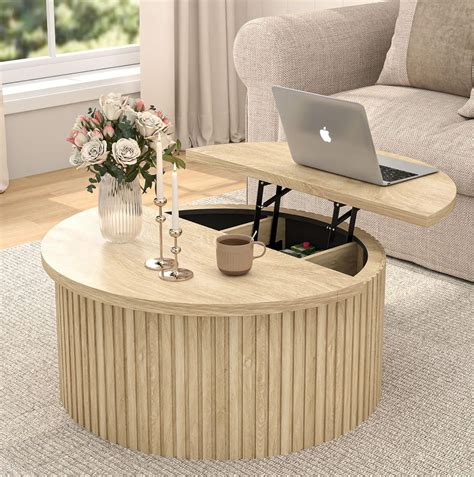
Multi-functional furniture serves as the cornerstone of any small-space strategy, offering dual benefits without doubling your footprint. In typical U.S. living rooms where entertaining, relaxing, and sometimes working all happen in the same zone, pieces that adapt to your immediate needs are invaluable. Instead of filling the room with single-use items, look for designs that integrate hidden compartments or transform dynamically throughout the day.
Storage ottomans and lift-top coffee tables represent some of the most reliable investments for everyday organization. A deep storage ottoman can easily swallow extra throw blankets, board games, or children’s toys while doubling as extra seating or a footrest when guests arrive. Meanwhile, lift-top coffee tables elevate smoothly to create an ergonomic makeshift desk or a comfortable surface for casual dining right from your sofa.
Utilizing Vertical Space Effectively
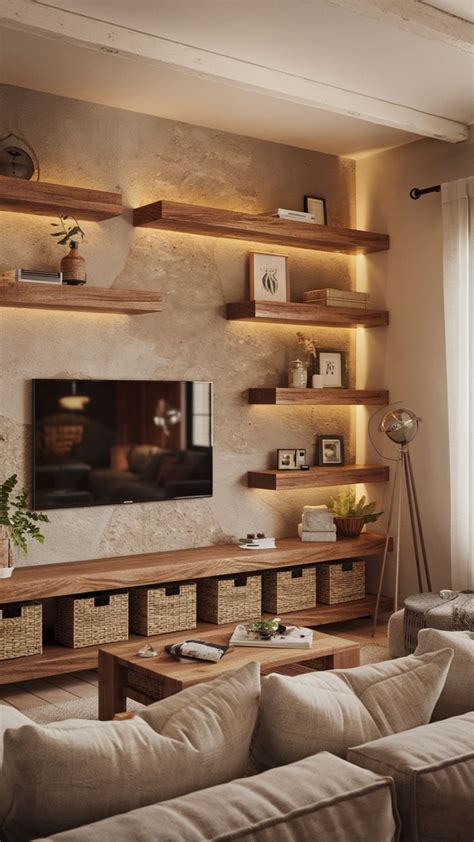
When floor space is severely limited, the easiest way to expand your room is to look upward. Many homeowners and renters underutilize their wall space, leaving large expanses bare while clutter accumulates on the floor. Installing vertical storage draws the eye upward, creating an illusion of higher ceilings while keeping everyday items neatly stored off the ground.
Floating shelves, modular wall units, and tall bookcases draw attention to the vertical dimensions of the room. For renters who cannot drill extensive holes in drywall, leaning ladder shelves offer a stable, leaning alternative that requires minimal anchoring. When styling these vertical elements, balance books and closed storage baskets with decorative objects to maintain an airy, curated aesthetic rather than an overwhelming storage wall.
Strategic Layouts for Awkward Floor Plans
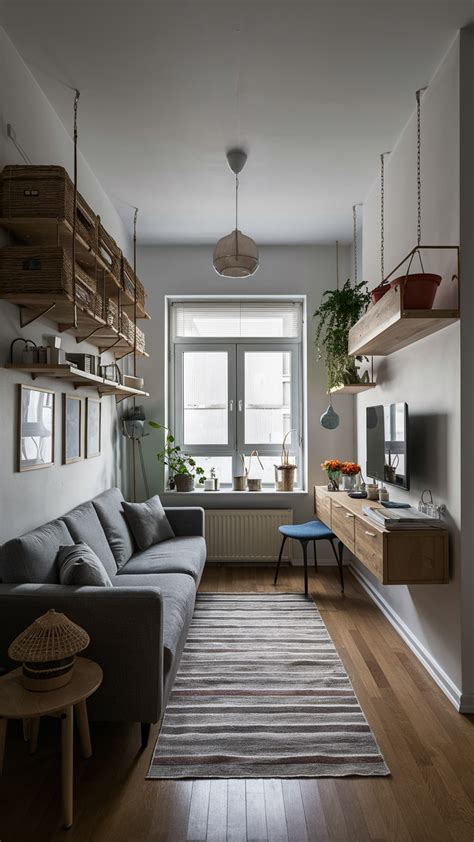
American living rooms often feature challenging architectural details, such as offset entryways, multiple doorways, or prominent television cable outlets that dictate where the sofa must go. Overcoming these spatial hurdles requires prioritizing traffic flow over conventional furniture arrangements. Pulling your primary seating away from the walls—even by just a few inches—can surprisingly make an awkward room feel larger and more intentional.
Zoning is another powerful tool for open-concept homes where the living room bleeds directly into the kitchen or dining area. Using a slim console table directly behind the sofa creates a subtle architectural boundary without blocking light or sightlines. Pairing this layout with low-profile furniture prevents the room from feeling blocked off, ensuring that natural light floods the entire space freely.
Clutter Management and Hidden Storage
Visual clutter is the number one culprit that makes a well-designed living room feel smaller than it actually is. Implementing hidden storage solutions allows you to maintain a minimalist, calming atmosphere without having to constantly purge your personal belongings. Think about integrating closed media consoles with cord management ports, woven baskets tucked under side tables, and media cabinets with slatted doors that hide electronics while allowing remote control signals to pass through.
When selecting these storage pieces, prioritize durability and hardware quality, especially for items with frequent mechanical use like drawers and hinges. Soft-close mechanisms and sturdy drawer glides ensure that your furniture withstands daily wear and tear. By blending smart closed storage with open display surfaces, you achieve a sophisticated balance where everything has a designated home.
Frequently Asked Questions
What are the best multi-functional furniture pieces for a small living room?
Lift-top coffee tables, storage ottomans, and modular sleeper sofas are among the most effective choices. They provide hidden compartments or transform to accommodate daily living needs without occupying extra floor space.
How can renters maximize living room storage without damaging walls?
Renters can utilize leaning ladder shelves, heavy-duty freestanding bookcases, rolling utility carts, and furniture with built-in storage like media consoles and storage benches to avoid permanent wall alterations.
How do I arrange furniture to make a narrow living room feel bigger?
Avoid pushing all furniture flush against the walls. Pulling seating slightly inward, using low-profile pieces that do not block sightlines, and utilizing light-reflecting decor will immediately open up a narrow space.
What should I look for when buying wall-mounted shelves for safety?
Always verify the weight capacity of the brackets and ensure the shelves are anchored into wall studs or installed with heavy-duty drywall anchors rated for the intended weight of your items.


