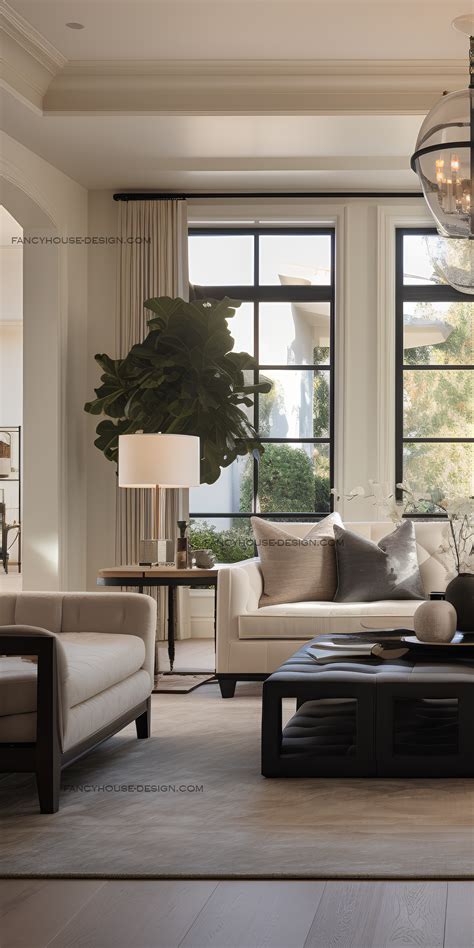
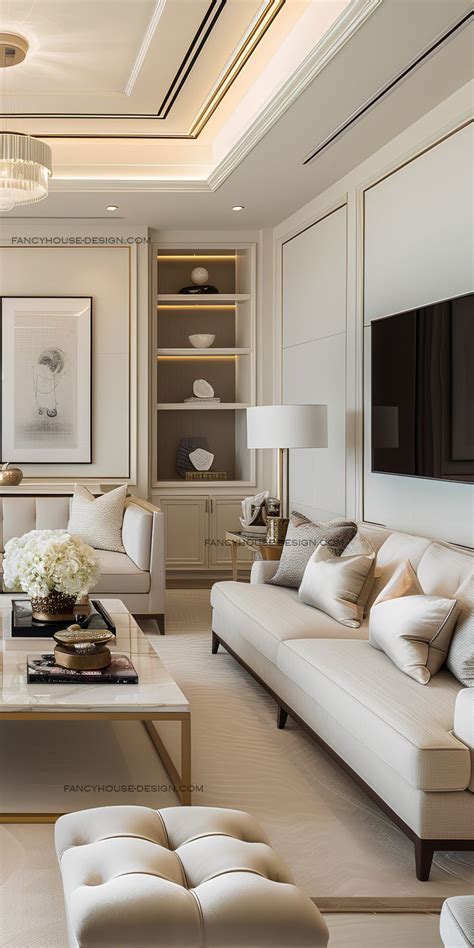
When you walk through the front door of many modern American homes, townhouses, or suburban apartments, the entryway is often the very first architectural element you encounter. Designing this zone requires a delicate balance between welcoming aesthetics and hard-working utility. For many layouts, a standard, bulky chest of drawers simply swallows too much walking space, while a miniature accent table leaves the wall looking bare and underutilized. Choosing a 63-inch narrow console table bridges this gap perfectly. Its extended linear profile spans empty wall space gracefully without crowding foot traffic, offering a sophisticated foundation for drop zones, decorative accents, and everyday organization.
Successfully integrating a piece of this size into your home involves careful measurement of your hallway clearance, thoughtful consideration of your household’s daily routines, and a deliberate styling approach. Because a 63-inch surface provides substantial horizontal real estate, it can easily transform from a sleek drop zone into a chaotic clutter magnet if you do not plan its composition carefully. By establishing clear focal points, utilizing vertical space, and selecting pieces that reflect your personal interior design style, you can turn a purely utilitarian hallway into an intentional, magazine-worthy welcome area that sets the tone for the rest of your residence.
Evaluating Space and Clearance for a 63-Inch Console Table
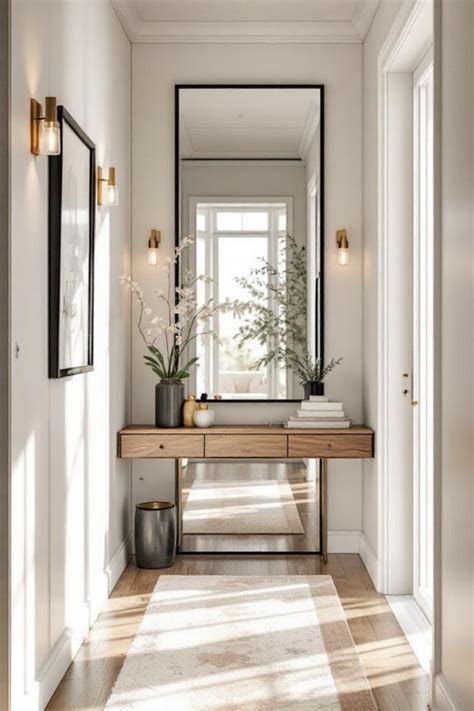
Before bringing any long furniture piece into your home, mapping out the physical dimensions against your actual floor plan is essential. A 63-inch length is roughly five feet and three inches, which requires a substantial stretch of unobstructed wall. In many suburban split-levels or open-concept modern houses, this length fits comfortably along the primary foyer wall. However, in narrower urban apartments, you must verify that opposite walls or adjacent doors will not collide with the table’s depth. Standard narrow console tables typically measure between 9 to 14 inches deep, which is ideal for preserving the vital walking corridors required by standard interior design guidelines.
Maintaining an open walking path of at least 36 inches ensures that family members and guests can move past the furniture comfortably, even when carrying groceries or luggage. If your entryway opens directly into a living room or staircase, a slim profile prevents the table from feeling like an accidental obstacle course. Additionally, consider how the table interacts with floor vents, baseboard heaters, and light switch plates. Taking painter’s tape and marking out the exact 63-inch by 12-inch footprint on your hardwood or carpeted floor gives you a real-world preview of how the piece will impact daily foot traffic patterns before you make a final purchase.
Styling a Long Linear Surface Without Clutter
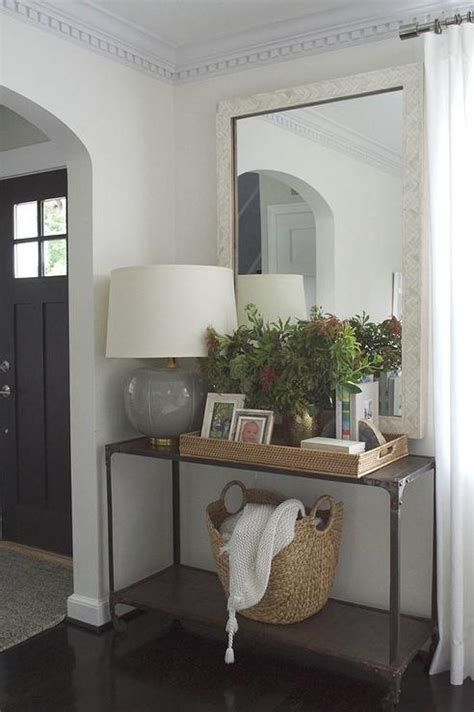
Styling a 63-inch surface presents a unique design puzzle because a long, unbroken horizontal line can easily look monotonous if it is decorated uniformly from end to end. The secret to keeping a large console table visually appealing lies in applying the rule of threes and creating asymmetrical groupings. Instead of placing matching lamps on both far edges, try anchoring one side with a substantial vertical element—such as a tall table lamp or a framed mirror hung securely on the wall—and balancing the remaining length with staggered clusters of varying heights. This keeps the eye moving naturally across the furniture piece rather than getting stuck in a rigid pattern.
To prevent the table from turning into a dumping ground for random mail, loose change, and car keys, assign specific decorative containers for functional items. A heavy ceramic bowl or a woven tray can corral everyday pocket contents out of sight, maintaining a clean aesthetic. Incorporate organic textures like a small potted succulent or a glass vase filled with seasonal branches to soften the man-made lines of the console. Remember to leave some negative space open on the tabletop; letting portions of the wood, marble, or metal surface remain bare is crucial for keeping the overall look airy, calm, and uncluttered.
Functional Storage Solutions for High-Traffic Entryways
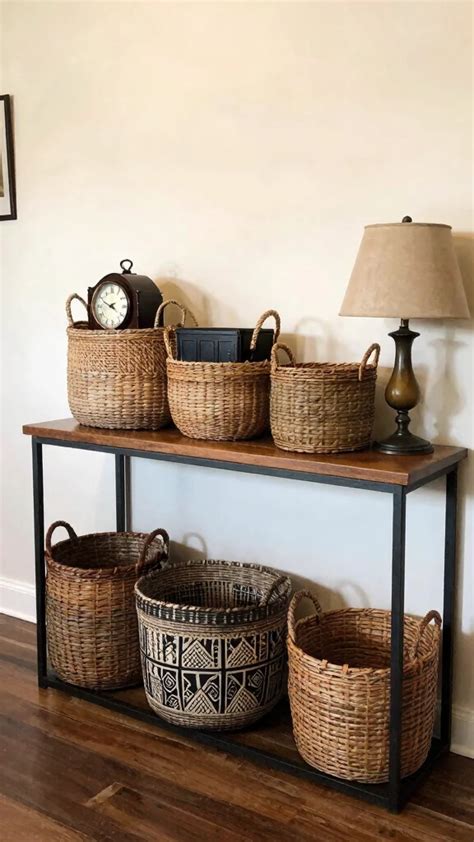
Beyond its aesthetic contributions, an entryway console table must earn its keep by supporting your family’s organizational needs. A 63-inch table offers plenty of under-utilized floor space beneath its frame, which can be harnessed for hidden storage. Tucking a pair of woven baskets or low-profile storage bins underneath the console creates an ideal spot for stashing seasonal accessories like winter scarves, umbrellas, or dog leashes. If your household deals with an endless rotation of athletic shoes or everyday footwear, keeping a shallow rolling tray or dedicated shoe bins beneath the table keeps the hallway floor completely clear of tripping hazards.
For households that require even more enclosed storage, look for a 63-inch narrow console design that features integrated drawers or a lower shelf. Drawers are fantastic for hiding away spare keys, sunglasses, charging cords, and outgoing mail that you do not want visible to visiting guests. If your chosen table features an open lower shelf, style it with a balanced mix of oversized coffee table books stacked horizontally and a couple of decorative storage boxes. This layered approach ensures that every square inch of your long console contributes to a tidier, more functional home environment.
Matching Materials to Your American Home Decor Style
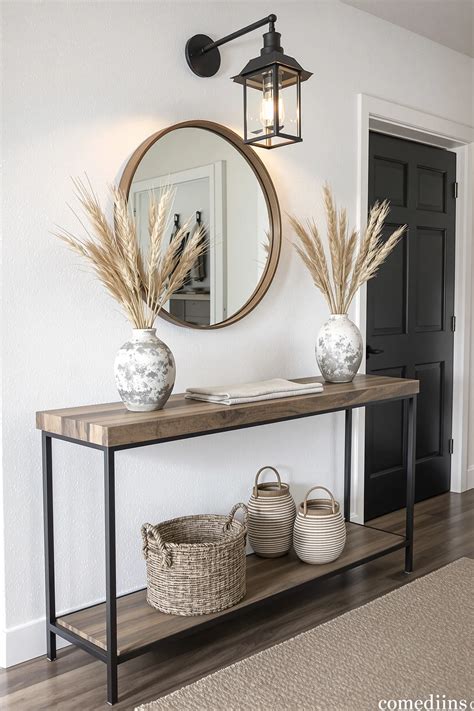
Console tables come in an expansive range of materials and finishes, making it easy to tie your entryway into the broader design language of your home. If your aesthetic leans toward modern farmhouse or rustic charm, a console crafted from reclaimed wood with black iron legs introduces warmth and character right at the front door. For contemporary or transitional spaces, a sleek frame featuring a faux-marble top and brushed brass hardware adds an immediate touch of quiet luxury and refined elegance without feeling overly formal or fragile.
Industrial, mid-century modern, and coastal styles are also well-represented in the narrow console category. When selecting your finish, consider how it coordinates with your existing interior doors, trim work, and nearby flooring. While matching wood tones perfectly throughout an entire house is no longer a strict interior design rule, creating a harmonious undertone ensures that your new entryway piece feels like an organic extension of your architecture rather than an isolated afterthought. Finally, always prioritize sturdy construction and appropriate wall-anchoring hardware, especially if you have children or pets, ensuring your stylish new drop zone remains safe and secure for years to come.
Frequently Asked Questions
Will a 63-inch console table fit in a standard apartment entryway?
It depends entirely on your specific hallway length and clearance. While 63 inches is quite long for a compact apartment foyer, it works wonderfully if you have a dedicated accent wall of at least six feet. Always measure your wall space and verify that door swings will not hit the edges of the table before buying.
How do I stop my entryway table from becoming a clutter magnet?
The best strategy is to designate specific homes for everyday items. Use a decorative tray or lidded box for keys and mail, and implement a strict policy of relocating items like backpacks and shoes to their proper rooms at the end of each day rather than letting them pile up on the console surface.
Is it necessary to anchor a narrow console table to the wall?
Yes, wall-anchoring is highly recommended for any tall, narrow, or heavy furniture piece placed in a high-traffic hallway. Securing the table to the wall prevents tipping hazards, providing essential safety for households with children, pets, or frequent guests brushing past the entryway.