Finding the right furniture piece to anchor an open-plan layout or a cozy suburban living room often comes down to versatile, narrow surfaces. Incorporating stylish console tables into your main living space provides an instant architectural upgrade without overwhelming valuable floor space. Whether positioned behind a sectional sofa, set against a bare drywall partition, or serving as a drop zone in an open-concept entryway that flows directly into the sitting area, these tables bridge the gap between form and function.
Successfully integrating this furniture category requires looking beyond the initial purchase and evaluating how scale, material selection, and surface composition interact with your daily routine. American homes feature diverse architectural footprints, ranging from compact urban apartments to spacious suburban great rooms, making thoughtful placement and proportional styling essential for a cohesive environment.
Choosing the Right Dimensions and Placement
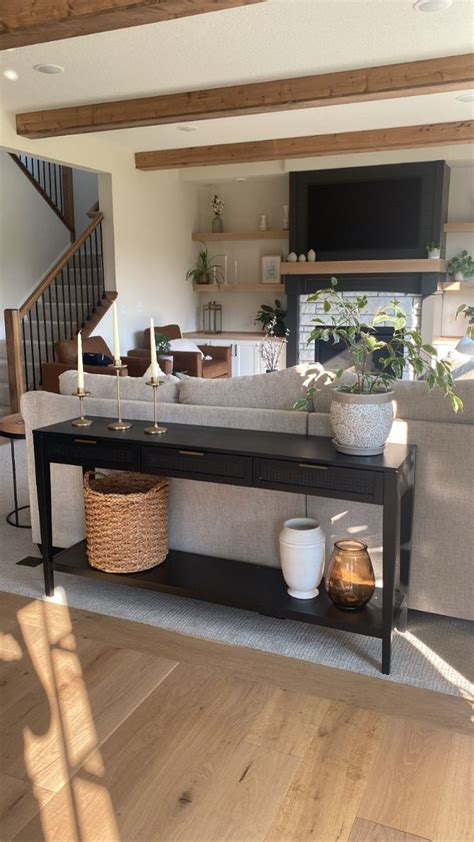
Before selecting a console table, measuring your available spatial clearance ensures the piece looks proportional and maintains smooth traffic flow. In standard American living rooms, a sofa console table should ideally match the height of your sofa back or sit roughly one to two inches lower. This prevents awkward visual breaks when looking across the room and ensures that lamps or decorative objects placed on the surface remain stable and functional.
Width and depth are equally critical factors, particularly when placing a table in narrow transition zones or tight walkways. A depth of 12 to 15 inches is typically sufficient to hold table lamps, photo frames, and decorative bowls without jutting into high-traffic pathways. Leaving at least 30 inches of open floor space around the table allows family members and guests to move comfortably through the room without feeling restricted by oversized furniture.
Selecting Materials That Match Your Lifestyle

Material choice dictates both the visual weight of the room and the long-term durability of the furniture piece. Solid woods such as oak, walnut, or reclaimed pine bring warmth, organic texture, and traditional character to living spaces, making them ideal for modern farmhouse or transitional interiors. Wood surfaces handle daily wear reasonably well, though households with young children or pets may benefit from matte or distressed finishes that easily conceal minor scuffs and fingerprints.
Alternatively, metal frames paired with tempered glass or marble tops offer a lighter, more streamlined profile suitable for contemporary or minimalist design schemes. Glass surfaces visually expand smaller rooms by allowing light to pass through uninterrupted, though they require more frequent dusting to maintain a pristine appearance. Powder-coated iron or brushed brass legs provide sturdy support while adding subtle metallic contrast that anchors the vignette against neutral wall colors.
Applying Balanced Styling Formulas
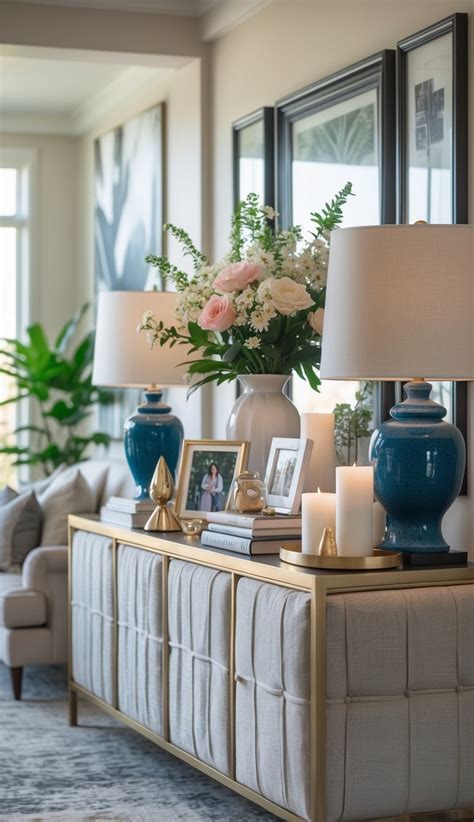
Styling a narrow surface without creating visual clutter relies on the rule of asymmetry and varied heights. Begin by establishing a focal point slightly off-center, such as a tall table lamp or a framed piece of art leaning against the wall. Layering objects of contrasting heights—like stacking a pair of hardback design books beneath a small ceramic vase—prevents the arrangement from looking flat or overly staged.
Incorporating natural elements such as potted greenery, trailing pothos, or seasonal branches adds organic movement and softens the rigid lines of the furniture. When editing your display, leave roughly one-third of the tabletop completely bare to give the eye a place to rest and prevent the surface from feeling crowded. Grouping items in odd numbers, such as clusters of three, naturally draws the human eye across the display in a balanced, harmonious rhythm.
Frequently Asked Questions
Where should I place a console table in my living room?
Console tables work best placed directly behind a sofa, against an empty perimeter wall, or along an entryway wall that opens into the living area. Placing it behind the couch helps define seating zones in open-concept layouts, while wall placement creates a structured focal point.
How do I style a console table so it doesn’t look cluttered?
To avoid clutter, follow a balanced curation formula using varying heights. Combine a tall element like a lamp or mirror with mid-sized objects like framed art or vases, and low items like stacked books. Always leave a portion of the tabletop empty to maintain visual breathing room.
What height and width are standard for living room console tables in US homes?
Standard console tables typically range from 30 to 36 inches in height, closely matching the average height of a sofa back. Width varies significantly based on wall space, usually spanning anywhere from 48 to 60 inches, with a shallow depth of 12 to 15 inches to preserve floor clearance.


